
LEGO
From Carpenter's Workshop to Sustainable Digital Play
Original Business Case Weekly articleIn the winter of 1932, a small workshop in Billund, Denmark, became the cradle of a global phenomenon. Ole Kirk Kristiansen, a carpenter who had survived the hardships of the Great Depression, began crafting wooden toys to keep his business afloat[1]. His workshop smelled of freshly cut wood and varnish, and he carved ducks and trucks from off‑cuts, insisting they be sanded smooth and varnished three times even when his young son Godtfred thought two coats were enough[1]. When he explained to the boy that every toy must meet the highest standards because children deserved the best, he coined the motto that would define the company: “Only the best is good enough.” In 1934 he condensed this commitment into a name derived from the Danish words "leg godt"—to play well—and LEGO was born[1]. The early years were fraught with challenges: as the Great Depression ravaged Europe, Ole lost his wife and saw his home and workshop destroyed by fire[2]. Yet each setback strengthened his resolve. From these humble beginnings, a culture of quality and resilience emerged, and the company would one day inspire millions of builders across the world.
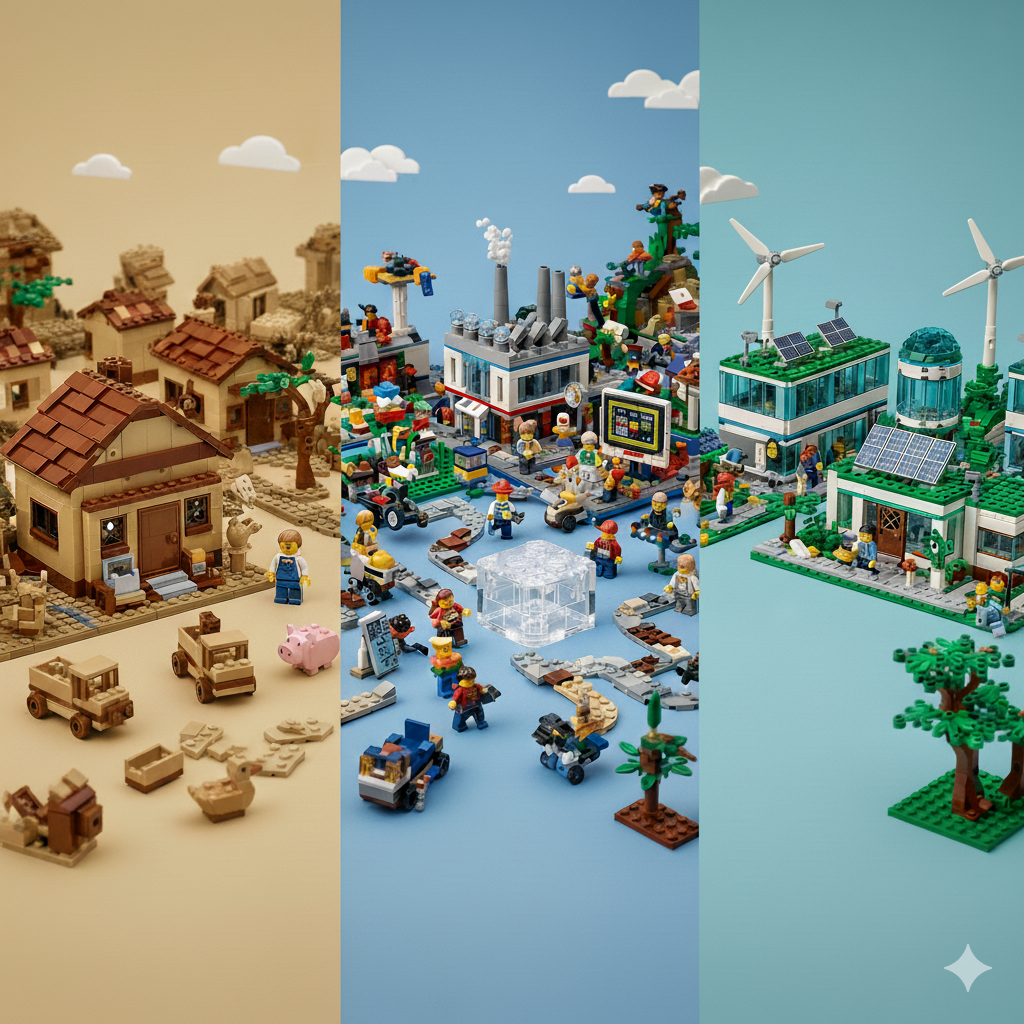
A Wooden-Toy Maker After the War
Your call
You run a small Danish wooden-toy company in 1946 when plastic is expensive, unfamiliar, and disliked by many retailers. Do you buy an injection-moulding machine, license plastic production, or keep improving wood? What evidence would justify concentrating the product system around one new material and connection standard?