
Hermès
Craftsmanship, Scarcity and Independence
Original Business Case Weekly articleHi everyone!
This is the story of how a company can maintain a 40% profit margin while producing goods by hand for a very long time. This is a story about Hermès.
For convenience, AI translations are available as PDFs in Arabic, Hindi, Spanish, Russian, and English.
Hermès is often seen as the archetype of quiet luxury. Even as the house crossed €15 billion in sales and €4.6 billion in net profit in 2024[1], its leaders insist that “we do not do marketing; we do not try to create an illusion by paying people to wear our products”[2].
This case study traces Hermès’ evolution from a 19th‑century harness workshop into a global luxury powerhouse. The narrative follows the people behind the brand, the context in which they made decisions, and the consequences of those decisions.
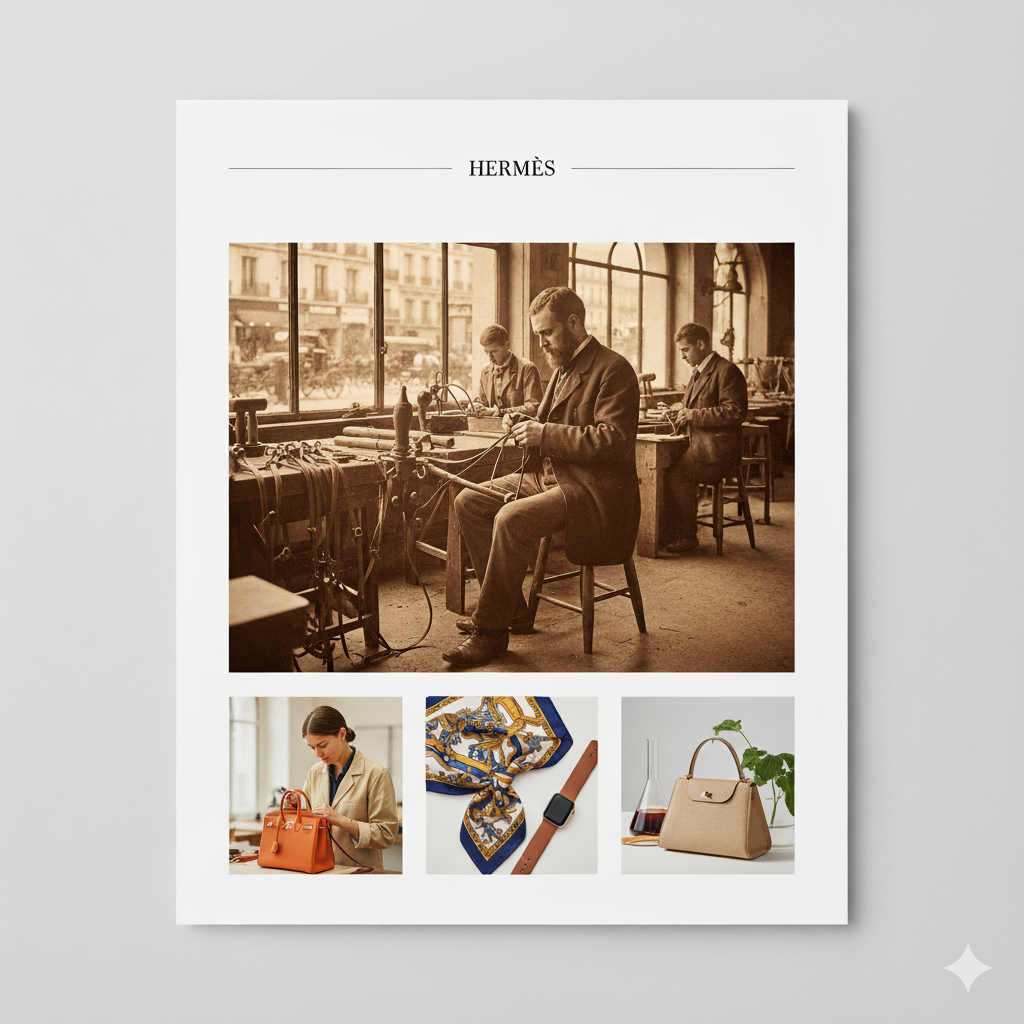
Origins: Thierry Hermès and the Harness Workshop (1837‑1878)
Thierry Hermès was born in 1801 in Krefeld to a French father and German mother. He learned leatherworking from his father and moved to Paris in the 1820s. Paris in the 1830s was a city of horse‑drawn carriages; nobles and monarchs prized ornate harnesses as status symbols. In this environment, Thierry opened a harness workshop on Rue Basse‑du‑Rempart in 1837[3]. His workshop specialised in high‑quality bridles, harnesses and saddles, and he aimed to serve the European elite. Hermès quickly gained recognition; his harnesses earned awards at the Paris World Fairs in 1855 and 1867[3]. Unlike many craftspeople who produced in volume, Thierry insisted on making each piece himself, using the durable saddle stitch and the finest leather. Although we have no surviving quotations from Thierry, his focus on quality over quantity established the brand’s ethos.
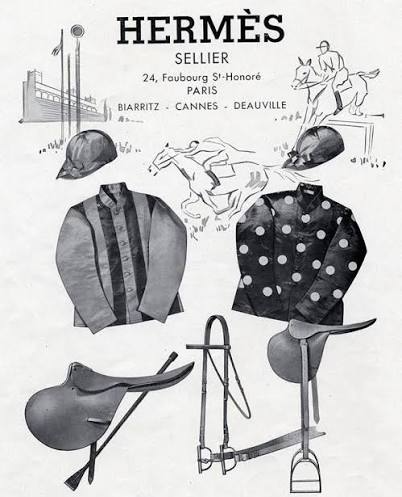
In the mid‑1800s, industrialisation was transforming Paris. Factories like those of the Singer sewing company were mechanising leatherwork, offering faster production at lower cost. Thierry could have mechanised to serve more customers. Instead, he embraced scarcity: he accepted only as many orders as he and his apprentices could complete by hand. He also decided to expand his client base beyond France, selling harnesses to European nobility and even the Russian and Spanish courts[4]. By focusing on elite clients and maintaining manual production, he elevated his workshop from an artisan’s shop to a symbol of prestige.
The founder’s discipline in protecting craft rather than chasing growth laid the cultural foundation that later generations would repeatedly refer to when making strategic decisions. When Thierry died in 1878, his son Charles‑Émile inherited a brand synonymous with perfection.
Expansion under Charles‑Émile and the Émile‑Maurice Generation (1878‑1930s). The first brand to use zipper.
By 1880 Charles‑Émile Hermès moved the workshop to 24 Rue du Faubourg Saint‑Honoré, an address that remains Hermès’ headquarters today[4]. The move signalled a shift from serving primarily horsemen to courting aristocrats visiting Paris’ fashionable district. Charles‑Émile and his sons Adolphe and Émile‑Maurice expanded distribution to Europe, Russia, North Africa and America[4]. Meanwhile, technological change threatened the family business. The late 19th century saw the advent of automobiles. Demand for horse‑drawn harnesses would inevitably decline.
Your call
You run a house built around horse harnesses as automobiles begin replacing carriages. You can defend the specialist craft, apply the leather skills to travel goods, or license techniques such as the zipper broadly. Which adjacency do you enter first, and what must remain recognisable so adaptation does not turn the name into a generic maker?