Roblox
Building the Infinite Playground
Original Business Case Weekly articleHi everyone!
Special thanks to my wife for her patience while I wrote this during our vacation.
For convenience, AI translations are available as PDFs in Arabic, Hindi, Spanish, Russian, and English.
I hope you enjoy the Roblox story.
When David Baszucki was an engineering student at Stanford in the 1980s, he and his younger brother Greg were tinkering with Apple II computers and imagining how software could make physics experiments come alive. In 1989 the brothers incorporated Knowledge Revolution and launched Interactive Physics, a 2‑D simulation program that let high‑schoolers build virtual ramps and pulleys. Baszucki hoped teachers would adopt the tool in their curricula, but what surprised him was how kids co‑opted it as a playground. In an interview for the Acquired podcast, Mario Gabriele recounts that Baszucki marvelled at how “users of Interactive Physics software use it for fun rather than school – kids would build all kinds of funny contraptions with the product”[1]. The unexpected playfulness of Interactive Physics planted a seed: maybe the next big software opportunity wasn’t an educational tool but a virtual sandbox where creativity was the point.
Baszucki’s main collaborator was Erik Cassel, a Cornell‑trained engineer who answered a magazine ad about Interactive Physics and joined Knowledge Revolution as VP of engineering in 1989[2]. Cassel built the simulation’s engine with painstaking rigor; colleagues later remembered that “when Erik built something, he always built it right”[3]. After selling Knowledge Revolution to MSC Software in 1998, the pair stayed in touch, brainstorming how to apply real‑time physics to a consumer product. They initially toyed with physics‑driven motors for wheelchairs before returning to the dream of a “digital playground.” In December 2003 they started prototyping under the codename eBlocks; it became GoBlocks and then DynaBlocks before settling on Roblox—a portmanteau of “robots” and “blocks”[4]. The name reflected their ambition to blend programmable pieces with LEGO‑like creativity. Baszucki later explained that the concept was inspired by Interactive Physics and their follow‑on CAD product Working Model because those programs attracted legions of young tinkerers[4].
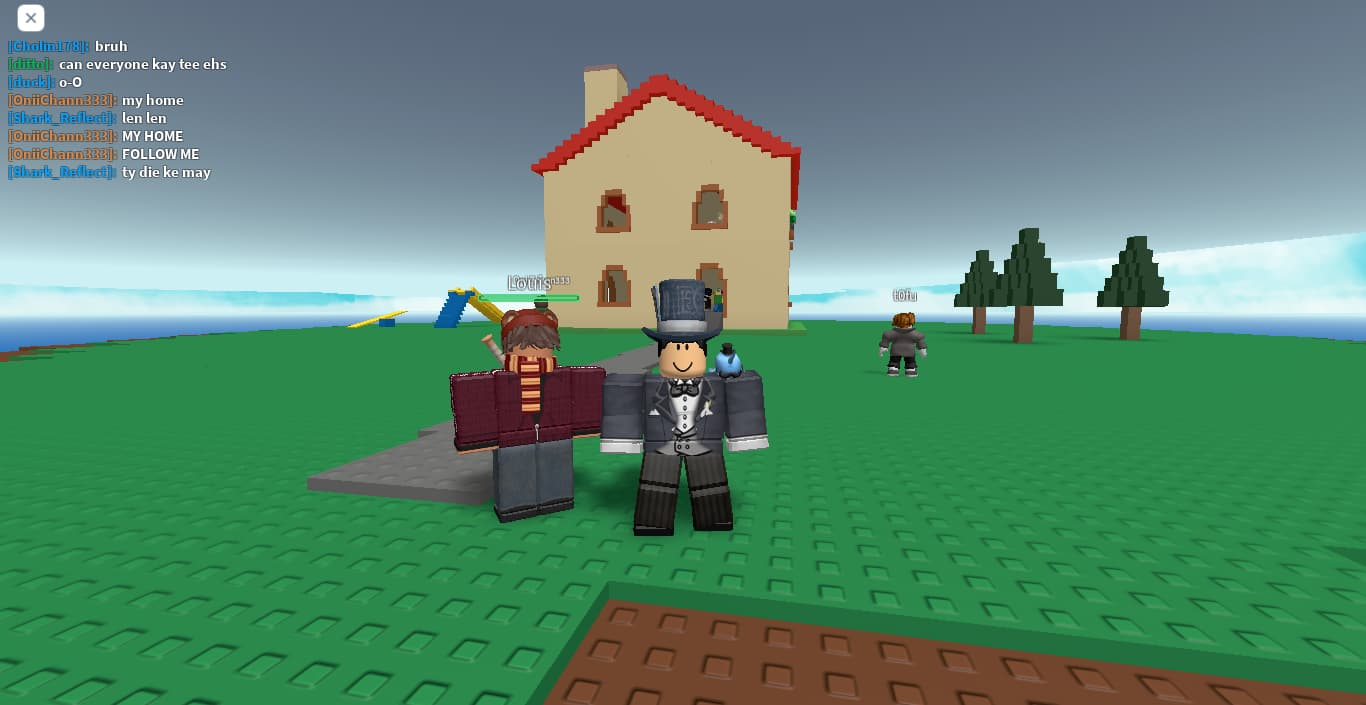
By 2004 the duo rented a tiny office in Menlo Park and built a prototype that combined a client for players, a studio for creators, and a backend cloud service to host experiences[5]. Launching a multi‑pronged platform was ambitious for two engineers, but they believed that empowering users to create their own worlds was the only way to scale. They quietly opened the site to users in 2004, rebranded as Roblox in January 2004[4] and officially launched on September 1, 2006[4]. Early visitors could decorate an avatar, hang out in virtual houses and hop to friends’ spaces, a social mechanic that foreshadowed the platform’s emphasis on community[6].
Slow Bake: Building a Community One Creator at a Time (2006‑2013)
Your call
You are David Baszucki during the platform’s slow first years. Venture investors show little interest, creator tools still need work, and raising more could force growth before the community is ready. Do you keep funding the company patiently, spend on user acquisition, or narrow it into a conventional game? Which creator behaviour tells you the platform model is compounding?