
Nintendo
A case study in betting the company on how people want to play
Original Business Case Weekly articleExecutive Summary
Nintendo, which began making playing cards in Kyoto in 1889, builds the machines its games run on and so decides which games may be sold for them. Because it designs each machine itself, every new one is a large bet on how people will want to play. Nintendo made an operating loss of ¥46.4 billion, about $460 million, in the year to March 2014, as the Wii U failed, and an operating profit of ¥640.6 billion, about $6 billion, seven years later, on the strength of the Switch.
It has seldom built the most powerful machine, competing instead on price, shape and new ways to play, and it has kept control of everything from the chips in the console to the choice of which games may be sold. In the late 1980s that control helped make it the most profitable company in its industry; in the late 1990s the same control drove game publishers to Sony. In March 2026 Nintendo held ¥1.79 trillion, about $11.5 billion, in cash, enough to survive a failed machine.
In early 2026 memory chips doubled in price as data centres for artificial intelligence bought up supply. In May Nintendo raised the price of the Switch 2, launched in June 2025, and by October its shares were more than 40 per cent below their peak. It must now decide how much more of the cost to pass on to buyers in the years when a console usually sells best.
Make It Hold for Three Years, 1889-1982
One evening in November 1981 the telephone rang at the Kyoto home of Masayuki Uemura, an engineer at Nintendo. The caller was Hiroshi Yamauchi, the company's president, who often rang his staff after a few drinks [1]. Uemura ran a development department of about five people. It had little to do, because its last product, an arcade game called Radar Scope, had failed [2]. Nintendo's best seller was then Game & Watch, a handheld game with a liquid-crystal screen, and Yamauchi was worried about what would follow it.
I suppose it started when former Nintendo president Yamauchi-san called me at home once. ... He said the good sales of Game & Watch wouldn't last very long. ... What's more, he told me to make a machine that wouldn't have any competitors for three years.
Masayuki Uemura, interviewed by Satoru Iwata, Nintendo's president, in "Iwata Asks", 2010 [3]
Yamauchi wanted a machine that plugged into a television and played games from cartridges [3]. Uemura assumed it was after-dinner talk until the next morning, when Yamauchi asked whether he had started work [1]. Uemura said that no machine could hold off rivals for three years. Yamauchi replied that, judging by Game & Watch, a hit lasted three years, so the new machine must hold for three, and that Uemura's department had time on its hands [2].
Nintendo was 92 years old that evening. Fusajiro Yamauchi had founded it in September 1889 to make hanafuda, Japanese playing cards printed with flowers, trees and birds. In 1902 it became the first company in Japan to make Western playing cards [4]. Hiroshi Yamauchi, Fusajiro's great-grandson, became president in 1949, at 22, after his grandfather Sekiryo, the second president, had a stroke. The young Yamauchi forced out a cousin to make sure he was the only family member in the business, and later removed the managers his grandfather had appointed [5]. From then on, Nintendo's big decisions were his.
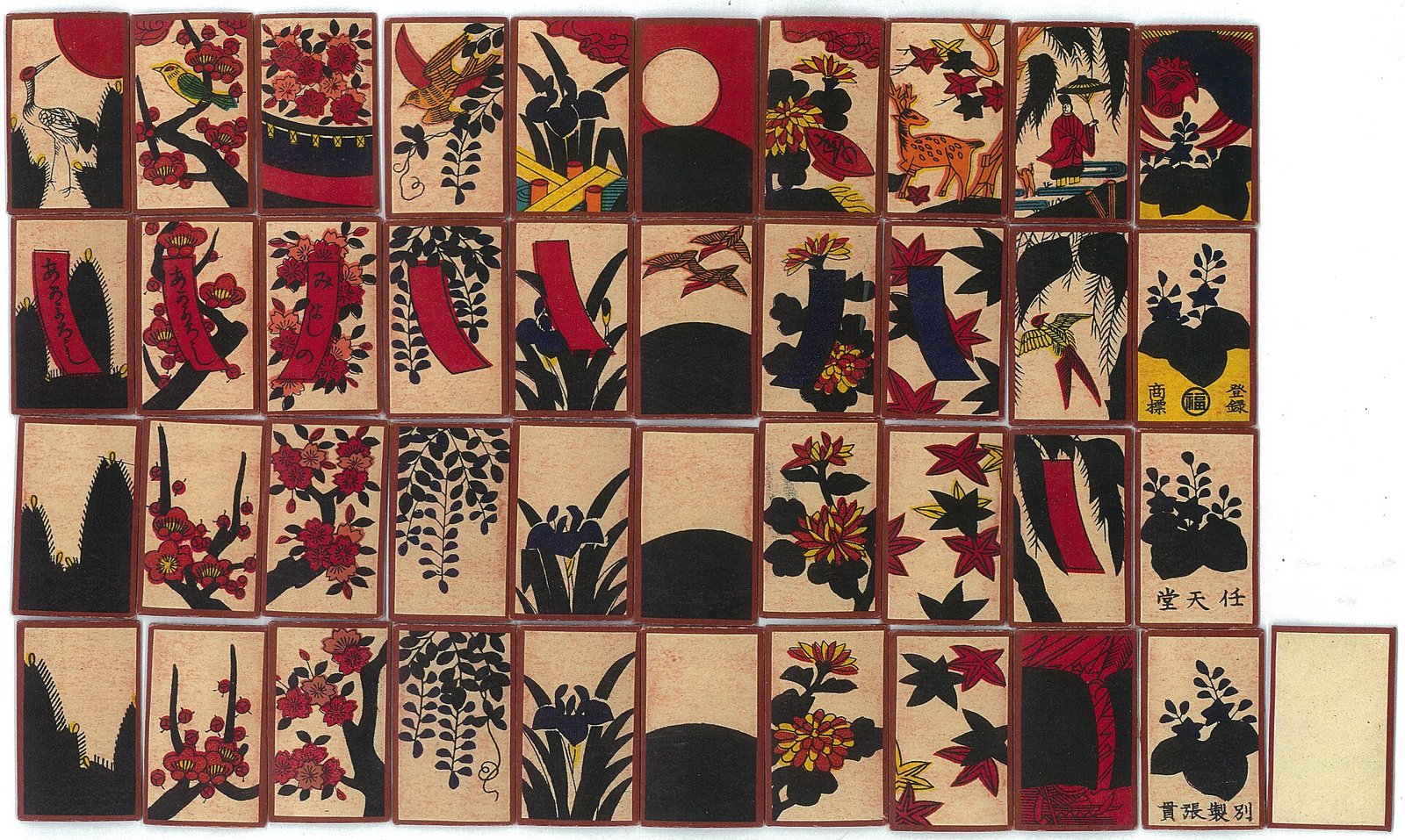
Cards gave him a steady business and little room to grow. On a visit to America in 1956, Yamauchi found that even the country's largest playing-card maker was a modest company [6]. In the 1960s Nintendo went into taxis and instant rice, among other things. Neither lasted, and by 1969 it had left them [6]. Yamauchi later put the failures down to a "lack of imagination" [5]. Toys did better. Many came from Gunpei Yokoi, an engineer hired in 1965 to maintain the machines on the card production line. His first toy, the Ultra Hand, an extending arm that could pick things up, sold 1.2 million units [7]. Yokoi had a rule for how Nintendo should use electronics.
The Nintendo way of adapting technology is not to look for the state of the art but to utilize mature technology that can be mass-produced cheaply.
Gunpei Yokoi, quoted by David Sheff, an American journalist, in Game Over (1993), his history of Nintendo [7]
Game & Watch, launched in 1980, was that rule at work: a toy built from the screens and chips of pocket calculators [8]. In the year to August 1982 Game & Watch and Nintendo's other products for the home brought in 59 per cent of its sales of ¥57.6 billion, about $231 million, and the arcade business most of the rest. Nintendo made a net profit of ¥7.8 billion, about $31 million [9]. (Yen figures in this case are converted at the exchange rates of their time.) Nintendo had sold its first home video-game consoles in 1977. The Color TV-Game machines, made with Mitsubishi Electric, each held a handful of built-in games such as tennis, and about 1.5 million units were sold in all [8].
The arcade business, which made cabinets for amusement halls, was less steady than the home products. Nintendo of America, the subsidiary Yamauchi had set up in New York in 1980, ordered 3,000 Radar Scope cabinets and sold only 1,000 [10]. Shigeru Miyamoto, a young designer, wrote a new game, Donkey Kong, for the same circuit boards. The unsold cabinets were converted to it in 1981, and it became a hit [2].
Yamauchi wanted the console to play arcade games like Donkey Kong at home, at a toy's price [11]. Nobody gave Uemura a target price. Toys, by the industry's rule of thumb, did not sell above ¥10,000, so his team assumed ¥9,800, about $39 [2][12]. The cheapest cartridge console on sale in Japan, the Cassette Vision from Epoch, a toy maker, cost ¥13,500 and had sold 400,000 units in its first year [13]. Most of the rival machines due in Japan in 1983 had keyboards and could be sold as home computers [8].
The problem was the custom chips the design needed. Japan's other big electronics companies turned the work down, saying their plants were busy making memory for word processors and personal computers [3]. Yamauchi did not ask Sharp, the obvious partner, because it made the parts for Game & Watch, and work on the console would have taken its effort away from them [3]. Then Ricoh, a maker of copiers and cameras, called. Its new chip plant was running at about 10 per cent of capacity, and it wanted the work [11]. By the summer of 1982 the design was fixed, and Uemura's team put the cost of making each console "far above ¥15,000". Sold at a toy's price, the console would lose money, so the profit would have to come from the games [14].
Ricoh could cut the price of its chips only if it made them in numbers that no Japanese console had come close to selling [7]. If Nintendo promised Ricoh an order of three million chips over two years, Ricoh would cut its price far enough for Nintendo to sell the console near a toy's price. Each console needed one set of the chips, so the order meant selling three million consoles in two years, twice as many as the Color TV-Game had sold in its whole life. Two years earlier Nintendo of America had ordered three times as many arcade cabinets as it could sell. Uemura himself believed that toy fads lasted about three years, so a console launched in 1983 might be fading before the order was used up, and many in the industry expected video games to give way to personal computers [1]. In December 1982 the sceptics gained support from America. Shares in Warner Communications plunged when it warned that Atari, its video-game company and the leader in America, would earn far less than expected [15].
Nintendo had safer options. It could order fewer chips and price the console above its cost of well over ¥15,000. It could add a keyboard and sell the machine as a home computer, as its rivals planned. Or it could stay with Game & Watch and the arcades, which were still earning money, and build no console.
Your call
It is late 1982 and you are Hiroshi Yamauchi, president of Nintendo. Game & Watch handheld games and arcade machines such as Donkey Kong are selling well: in the year to August 1982 Nintendo made a net profit of ¥7.8 billion on sales of ¥57.6 billion. But you expect the handheld games to fade within a few years. Your engineers have designed a home console that plays games from cartridges and would cost well over ¥15,000 to make in the numbers they expect. Toys rarely sell above ¥10,000, and the cheapest console on sale, the Cassette Vision from Epoch, a toy maker, costs ¥13,500. Ricoh, a Japanese maker of copiers and cameras whose new chip plant is nearly idle, could make the console's chips cheaply, but only in very large numbers. Nintendo's earlier consoles, the Color TV-Game machines, sold about 1.5 million units in all, and two years ago Nintendo of America ordered three times as many arcade cabinets as it could sell. You can promise Ricoh chips for three million consoles over two years and price the console below ¥15,000, close to toys and the Cassette Vision, below its cost at today's volumes; order chips for a much smaller first run and price the console above its cost of well over ¥15,000; add a keyboard and sell it as a home computer, as most rival makers plan to; or build no console and stay with Game & Watch and the arcades. Choose, say what must be true about Japanese families for your choice to pay, and name the sales figure, a year after launch, that would tell you to change course.