Netflix
A case study in when to give up a working business for one that might replace it
Original Business Case Weekly articleExecutive Summary
Netflix has spent most of its 29 years facing one question in different forms: when to put its own business at risk for the one that might replace it. A company that rented films by post had to weigh sending them over the internet. One that licensed series from studios had to weigh commissioning its own. One whose subscription carried no advertising had to weigh a cheaper plan that did. Each move would put at risk the revenue that paid for it, and each had to be weighed before the evidence arrived.
The case stops at seven of those moments. Each is told up to the decision, with only what was knowable then.
You take the first from across the table, as the rival deciding what the young company was worth, and the rest from inside it, as the people running it.
Fifty Million Dollars on the 23rd Floor, 1997-2000
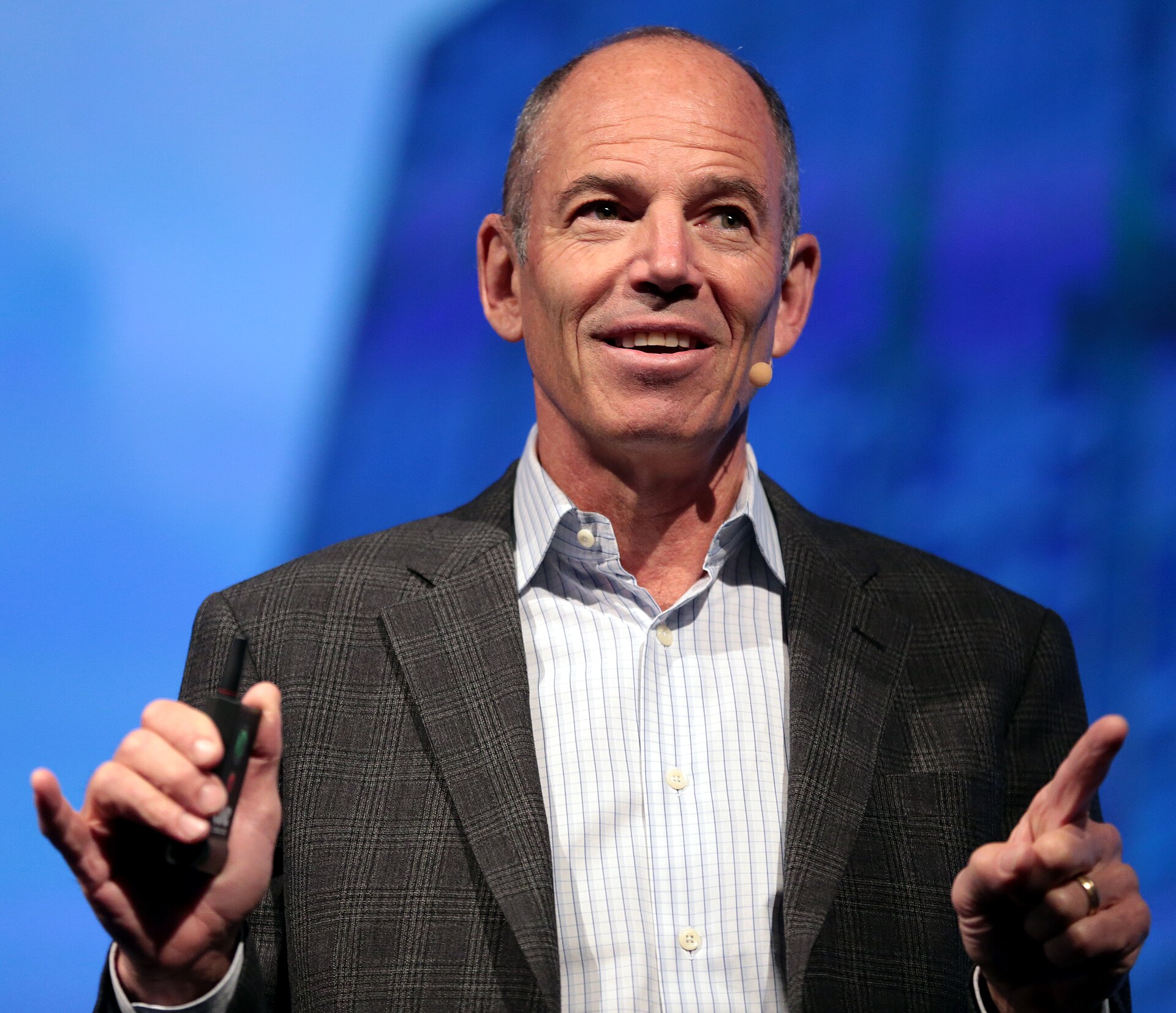
In September 2000 three men from a loss-making internet company in California flew to Dallas to sell it. They were Reed Hastings, Netflix's chief executive; Marc Randolph, who had founded the company with him; and Barry McCarthy, its finance chief [3]. On the 23rd floor of the Renaissance Tower they sat down with two men from Blockbuster, the video-rental chain: John Antioco, its chief executive, and Ed Stead, its general counsel [3]. Randolph remembered that the Netflix men had come in T-shirts and shorts, while their hosts wore expensive clothes and alligator shoes [4].
Netflix was three years old. Hastings and Randolph had incorporated the company in August 1997 and opened the website in April 1998 [5]. Their idea was to rent DVDs by post. Before committing to it, they had tested the first thing that could kill it: whether a disc could travel through the post quickly and cheaply. They bought a used music CD, which is the same size as a DVD, and posted it to Hastings's house in Santa Cruz. Sent "for the price of a postage stamp", it arrived in less than 24 hours [4].
In September 1999 Netflix stopped charging for each rental and started selling a monthly subscription, the model it would keep through its DVD years [5]. Members kept a few discs at home, posted each one back in a prepaid red envelope when they had finished with it, received the next film from the list they had made on the website and never paid a late fee. Cash was leaving Netflix far faster than it was coming in. The company lost $29.8 million in 1999 and was on its way to losing $57.4 million in 2000 [5]. In the spring of 2000 investors turned against internet companies of every kind.
There is not a cent to be had, especially not for a company with dot-com in its name. So we are desperate.
Marc Randolph, on the spring of 2000, The Tim Ferriss Show, 1 February 2021 [4]
That was why they were in Dallas. Hastings pitched the sale as a partnership.
We should join forces. We will run the online part of the combined business. You will focus on the stores. We will find the synergies that come from the combination, and it will truly be a case of the whole being greater than the sum of its parts.
Reed Hastings to John Antioco, as recalled by Marc Randolph in That Will Never Work (2019) [6]
Blockbuster had thousands of stores and close relationships with the studios, but nothing online. The proposal could be read in two ways. A rational executive could see a quick way into online rental, together with a team that had already worked out how to run it. Just after the internet bubble had burst, an equally rational executive could see a start-up that was losing tens of millions of dollars a year, with a service that depended on DVD players many homes did not yet own.
Then Stead asked: "If we were to buy you, what are you thinking? I mean, a number. What are we talking about here?" Hastings answered with two words: "Fifty million" [6].
Your call
It is September 2000 and you run a video-rental chain with thousands of stores and no online business. Across the table sit the founders of a three-year-old website that rents DVDs by post on a monthly subscription with no late fees. It is losing tens of millions of dollars a year, and investors have just turned against internet companies. The founders ask $50 million for the business. Their team would run the online side of the combined company and you would run the stores. DVD players are still new in American homes. You can buy at that price, propose a partnership or a licensing deal without buying, or decline and build an online service of your own when the market is clearer. Choose, say what you would have to believe about DVDs and internet rental for your choice to be right, and name the evidence that, if it appeared within two years, would make you revisit it.