Telegram
A case study in the price of refusing outside money, outside rules, and outside help
Original Business Case Weekly articleExecutive Summary
Every messaging company says it values privacy and independence. Telegram is the only one that reached a billion users while its founder refused, for eleven straight years, to sell a single share of it, and he still owns all of them. That refusal has a price, and the price is documented. To avoid equity investors, Telegram sold $1.7 billion of a cryptocurrency that never shipped, was ordered to disgorge $1.2 billion of it, and then borrowed about $2 billion instead at coupons that climbed from 7 to 9 percent [1][2][3][4]. To avoid policing private content, it held a position that ended with its founder in a French cell, and the policy he had defended since 2013 was rewritten eighteen days after his release [5][6]. The strategy also worked. Telegram made its first profit in 2024, and by 2026 the token regulators had killed was back under its original name and under Telegram's control. This is the cleanest available study of what independence costs when a founder refuses to put a price on it.
A Letter From the FSB, 2011-2014
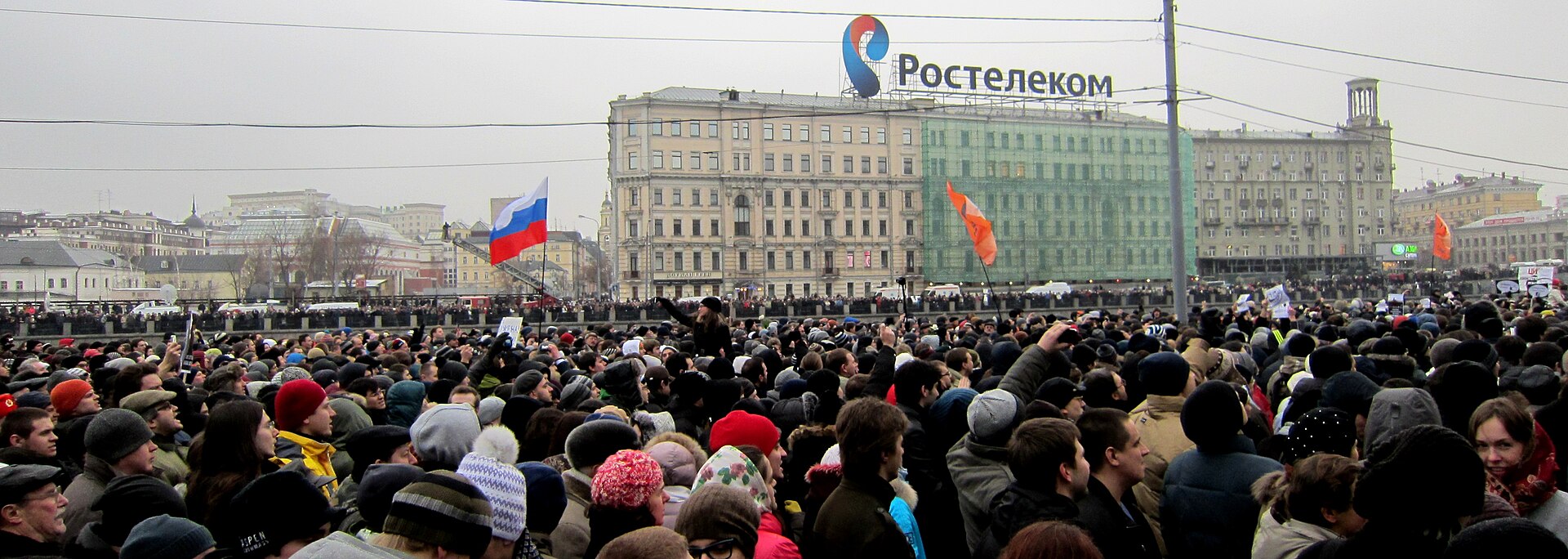
On 8 December 2011, four days after a disputed Russian parliamentary election filled Moscow's streets with protesters, the St Petersburg branch of the Federal Security Service sent a written demand to VKontakte, Russia's largest social network. It named seven groups being used to organise anti-government demonstrations and instructed the company to block them. VKontakte's 27-year-old founder, Pavel Durov, refused, and then published a scan of the security service's own letter so that everyone could read it [7]. That night men in camouflage came to his apartment and hammered on the door demanding entry. He did not open it. They left after about an hour, and a summons to the prosecutor's office followed [7][8].
Durov has told the story many times since, and his version has a specific ending. Standing behind that door, he realised he had no safe way to tell his older brother what was happening. There was no messaging app he trusted with a conversation the state wanted to read. Telegram began, by his account, as a private tool for two brothers [8]. That origin story is self-reported and should be read as such, but the surrounding facts are documented, and they explain the posture that governs everything after.
He had arrived at that door by an unusual route. Born in Leningrad in 1984, Durov spent much of his childhood in Turin, where his father, a philology professor, worked, then read philology at Saint Petersburg State University. In 2006 he and his brother Nikolai launched VKontakte, and by 2013 it had roughly 100 million users and was the dominant social network in the Russian-speaking world [9]. Nikolai Durov, four years older, is the technical half of the pair. He won three gold medals at the International Mathematical Olympiad, was on the Saint Petersburg State University teams that took the ACM programming world finals in 2000 and 2001, and holds doctorates from Saint Petersburg and from Bonn, where he studied under the Fields medallist Gerd Faltings. Telegram's own FAQ still describes the division plainly, saying that Pavel supports Telegram "financially and ideologically while Nikolai's input is technological" [10].
Your call
You are Durov's lawyer in March 2013, the week United Capital Partners completes its purchase of 48 percent through the holding companies. You can litigate the workaround, negotiate a governance package that protects the founder's editorial control, or advise him to sell his own stake immediately while the buyer still wants a clean deal. Which do you recommend, and what would you need to believe about the next twenty-four months of political pressure to justify it?