Spotify
A case study in unit-economics endurance and the patience of the company that took 18 years to make money
Original Business Case Weekly articleEarlier this month I read Spotify’s Q1 2026 numbers. 761 million monthly users. 293 million paid subscribers. €715 million in quarterly operating profit on €4.5 billion of revenue. A Q1 free cash flow record of €824 million [1].
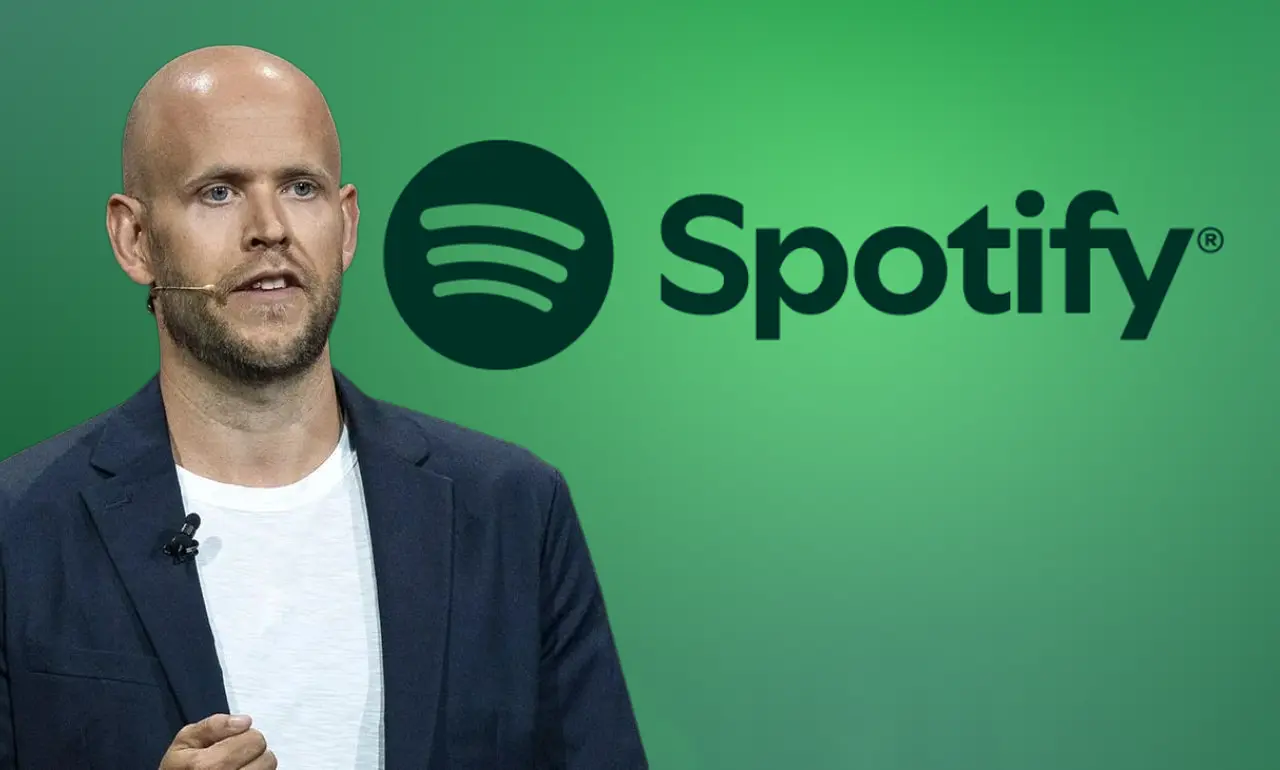
Daniel Ek had been gone from the CEO chair for exactly four months. He stepped aside on January 1, 2026, right after the company posted its first full year of profitability in 18 years of operation [2][3].
He stayed long enough to see one clean profitable year, and then handed the keys to two co-CEOs to focus on Helsing, the German military-AI drone company he chairs [4].
For 18 years Spotify ran a structurally broken P&L. The recorded-music labels took roughly 70 cents of every premium dollar before the company spent a single euro on engineering, marketing, content, hosting, or anything else [5]. And the only thing holding the company together through that gap was a founder willing to keep saying it would work.
From a builder’s standpoint the interesting thing about Spotify is not that it became the world’s largest music streamer. It is that the team figured out how to bolt a high-margin business (podcasts, audiobooks, fitness, ads) on top of a low-margin one (licensed music), and used the first to subsidize the second long enough to win the market.
A Stockholm Apartment, 2006-2008
In the autumn of 2006, on the second floor of an apartment building on Riddargatan, in the part of central Stockholm where the business district meets the residential streets of Östermalm, a handful of KTH engineering graduates spent their first week lugging IKEA flat-packs up the stairs and assembling office furniture [6]. They unpacked whiteboards. They installed servers. They built their company’s first headquarters out of a residential apartment because they could not yet afford anything else.
Among them was Daniel Ek, twenty-three years old, fresh out of a personal collapse he would later describe in interviews as a period of depression after selling his first company. Beside him, on paper at least, was Martin Lorentzon, the older, wealthier co-founder who had just committed roughly €1 million in seed money out of his own pocket and resigned publicly from TradeDoubler, the affiliate-marketing company he had taken public a year earlier [7].
Daniel Ek grew up in Rågsved, a working-class district south of Stockholm, raised mostly by his mother and stepfather [8]. He started building websites for local businesses at thirteen and, by his own account, was charging up to $5,000 per page and clearing close to $50,000 in some months from a computer in his bedroom [9].
He dropped out of KTH Royal Institute of Technology, founded an online-ad company called Advertigo, and sold it to TradeDoubler in March 2006 for roughly $1.25 million. He was 23. He bought a red Ferrari, a luxe central-Stockholm apartment, and tried to retire into nightlife [9][10]. The retirement lasted only a few months. By the summer of 2006 he had moved into a cabin in the woods, sold the Ferrari, and was, in his own description, fumbling for a purpose [11].
The idea that pulled him out was specific. Napster, the file-sharing service that had taught a generation of listeners to expect any song instantly and for free, had collapsed in 2002 under lawsuits. Apple’s iTunes Store had become the legal alternative, but only by reinstating ownership and price-per-track in a market the pirates had already trained to want neither [12]. Ek and Lorentzon’s bet was that the answer was not to make people pay per download. It was to make piracy obsolete by offering something better than piracy.
I realized that you can never legislate away from piracy.
Daniel Ek, paraphrased from his 2017 reflection on Spotify’s origin thesis, in Frederick AI founder profile [12]
Lorentzon’s first $1 million in seed funding bought roughly two years of runway [13]. The team spent it on two things in parallel. First, they engineered a desktop client whose key feature was sub-200-millisecond start-of-play time so that streaming would feel like local playback. Second, they took on the substantially harder problem of getting the four major music labels (Universal, Sony BMG, Warner, EMI) to license their catalogs at all [13][14].
Your call
You are Lorentzon in mid-2007, eighteen months into licensing talks with Universal and Warner, with your seed capital running low and no signed deal in any major market. The labels are using the threat of walking away to push for higher advances and equity. Do you keep negotiating, license to a smaller catalog and launch with what you have, or pivot to a model the labels cannot block? What changes in your reasoning if you know that the labels’ counter-offer has gone from rejecting your model to demanding 6-7% equity in your company?