
Unitree
A case study about World’s Best-Selling Humanoid Robot
Original Business Case Weekly articleUnitree Robotics is the only profitable humanoid robot company at meaningful scale.
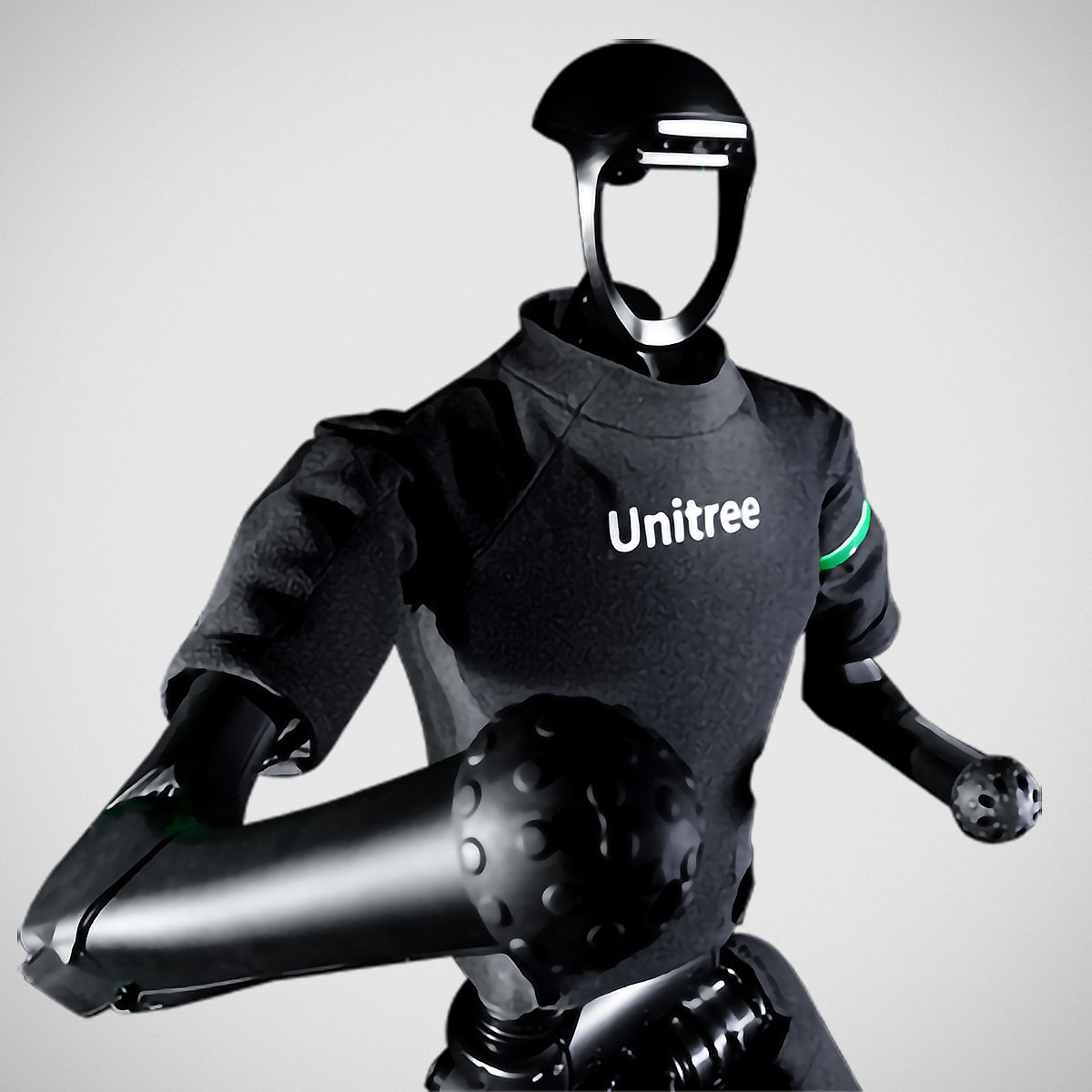
In 2025 it shipped 5,500-plus humanoid units, took 32.4% of global humanoid shipments, recorded ¥1.71 billion ($250 million) in revenue, and posted ¥600 million in adjusted net profit [13][14][15], all while Boston Dynamics, Figure, and Tesla still burned cash.
The company did this not by inventing better robots than the West, but by treating cost as the only KPI for nine years [35] and selling research-grade hardware to academia for a tenth of the price of any competitor.
The story is unusual because the founder, Wang Xingxing, is a Chinese engineer who flunked English exams, missed admission to Zhejiang University, and built his first prototype on a ¥20,000 ($3000) budget for a master’s thesis [3].
The question now in front of a probable $7 billion IPO valuation [38] is whether the discipline that won the hardware race can win the AI race that follows.
Two Months at DJI, 2009–2017
In June 2016, Wang Xingxing defended his master’s thesis at Shanghai University. The committee watched a video of XDog, a small four-legged robot that he had built over the previous year, walking forward, backward, and sideways using brushless DC motors of his own design [4][5].
Within days the video was circulating on Chinese tech media, then on robotics blogs in the United States and Germany.
Wang had already accepted a job at DJI, the Shenzhen drone maker founded by Frank Wang Tao. He moved south, started his probation period, and waited. Within two months the messages arrived: investors offering money, customers offering to buy.
He had to choose between a probationary engineer’s salary at China’s most successful hardware company and an offer of ¥2 million in angel funding to build something that did not yet exist as a category. He chose to resign. On August 26, 2016, he registered Hangzhou Yushu Technology Co., Ltd. (doing business as Unitree) in a 50-square-meter office in Binjiang District [4][5][20].
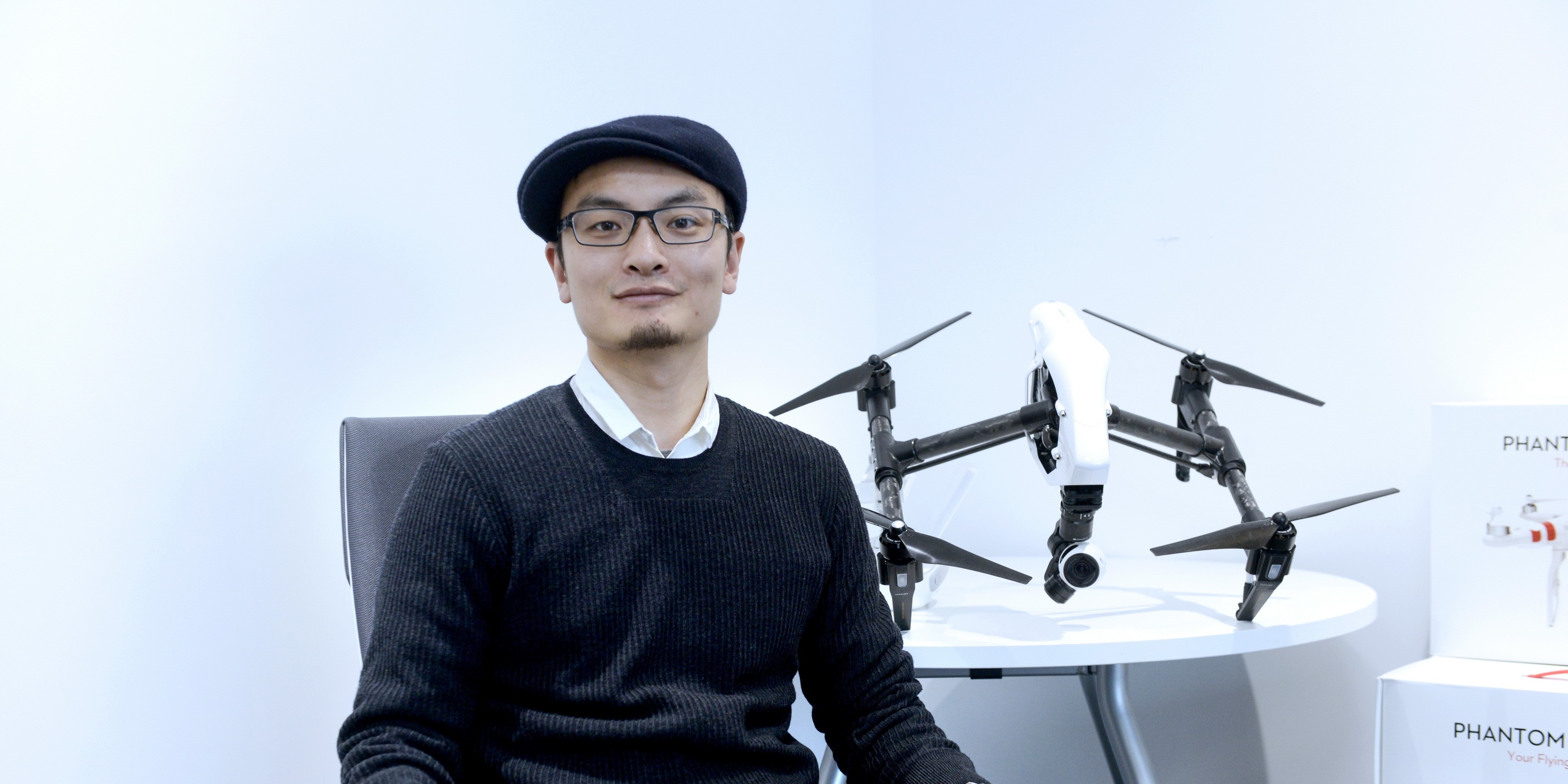
Born in 1990 in Yuyao, Zhejiang, the son of an ordinary family, Wang had been considered a “slow child” by his teachers and a poor performer at English. His English scores dragged his university admission down.
He missed Zhejiang University and ended up at Zhejiang Sci-Tech University, a tier below, majoring in mechatronics engineering [3][7]. What he had instead was hands. As a first-year undergraduate he built a small bipedal walking robot from scavenged parts.
Without equipment, I used a small hand drill, file, and scissors; without funds, I bought parts for 9 RMB and scavenged unwanted scrap materials. In the end, with just 200 RMB, I made a small bipedal robot.
200 RMB - $30 US Dollars. Wang Xingxing, interview with Chinese media via Our China Story, 2025 [3]
The most prominent platforms then were the BigDog and Spot from Marc Raibert’s Boston Dynamics, the MIT spin-out then owned by Google. Hydraulic actuation gave high force but required heavy pumps, expensive valves, and noisy operation; Wang’s bet was that brushless DC motors with custom controllers could deliver “good enough” performance at a fraction of the cost.
Asked early on whether he planned to compete with Boston Dynamics by selling abroad, he said:
I won’t have this difficulty because my English is poor, and it might be challenging for me to go abroad, so this situation won’t happen, and I don’t need to consider this issue.
Wang Xingxing, early interview with Chinese tech publication, c. 2017–2018, cited in AIProem [20]
The remark looked self-deprecating. It was also strategy by accident.
Unitree vs Boston Dynamics comparison
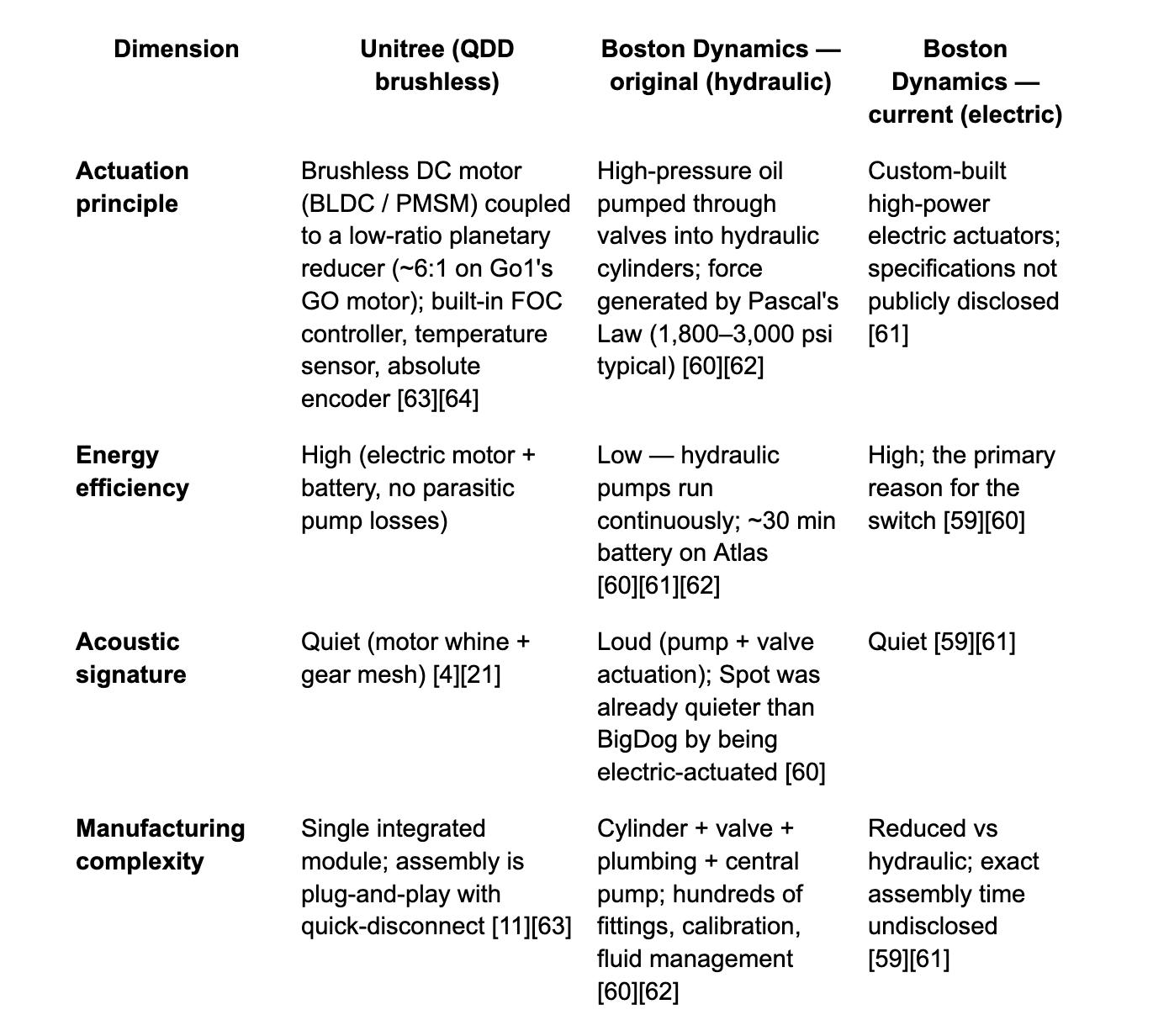
The single most consequential engineering decision separating the two companies is how they convert stored energy into motion. Boston Dynamics’ founding-era robots (BigDog 2005, Atlas 2013, the original Spot 2015) were built around hydraulic actuators because nothing else could deliver the force-density needed for parkour-grade dynamics [59][60][62].
Unitree was founded in 2016 with the opposite bet: that brushless DC motors in a quasi-direct-drive (QDD) configuration could deliver “good enough” performance at a fraction of the cost, weight, and serviceability burden of hydraulics [4][20][21]. The decision compounded for a decade. By April 2024 Boston Dynamics retired hydraulic Atlas in favor of an all-electric replacement [59][61] — implicit acknowledgment that Unitree’s thesis had won at the architecture level. The remaining gap, summarized below, is now about implementation maturity rather than approach.
Bargain with Academia, 2017–2022
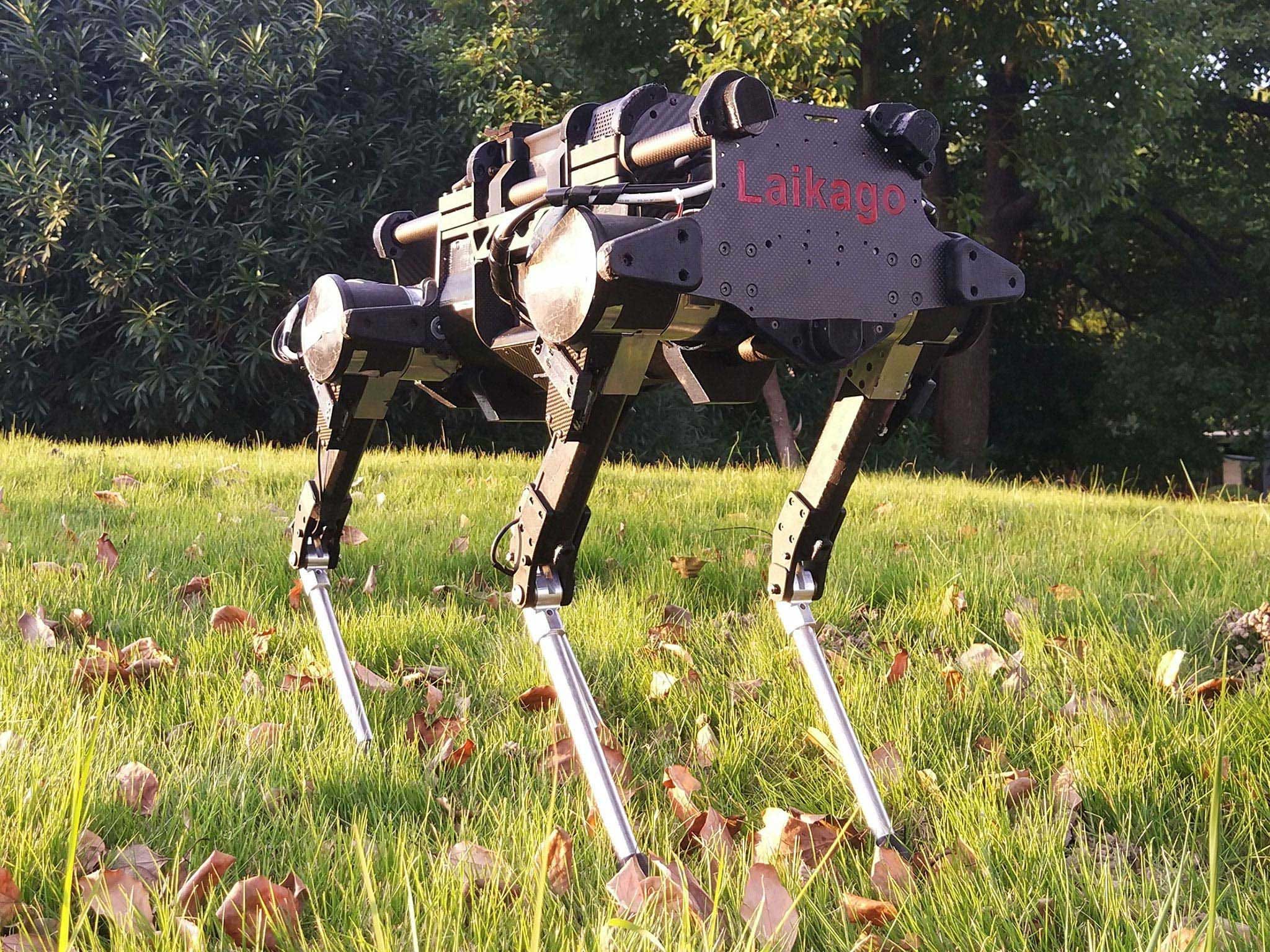
The first product, Laikago, launched in 2017 and was named after Laika, the Soviet space dog who orbited Earth in Sputnik 2 in 1957.
Pre-orders opened that year; first shipments went out in 2018 [1][6]. The early customer base was almost entirely universities and research labs. Unitree had a problem and a calling-card both wrapped into one. Wang has been blunt in interviews about why this customer base mattered.
Customers’ willingness to pay for your products is the real commercial closed-loop. Otherwise, it’s always a failed product.
Wang Xingxing, interview with GeekPark, cited in 36Kr, 2025 [35]
The path-not-taken in this period was the Boston Dynamics path. Take government and military money, build the most capable robot in the world at $74,000 per unit, hand-pick a handful of corporate research customers, and pursue commercialization as a slow side-quest. Boston Dynamics began retailing Spot in 2020 at roughly $74,000 [21]. The steelman ran like this. Government contracts paid R&D bills, locked in defense relationships, and avoided the messy work of selling to thousands of underfunded academic labs. A well-funded competitor in 2017 would have copied Boston Dynamics, not undercut them.
Your call
You are an investor in 2018. Unitree is selling research-grade quadrupeds to Chinese universities at one-fifth Boston Dynamics’ price, has no military contracts, and the founder cannot give a presentation in English. Do you write a check at the price they are asking? What revenue-per-unit and unit-volume thresholds would change your mind?