
ASML
A case study in stubborn multi-decade bets and supply-chain monopoly. The World’s Most Expensive Machine
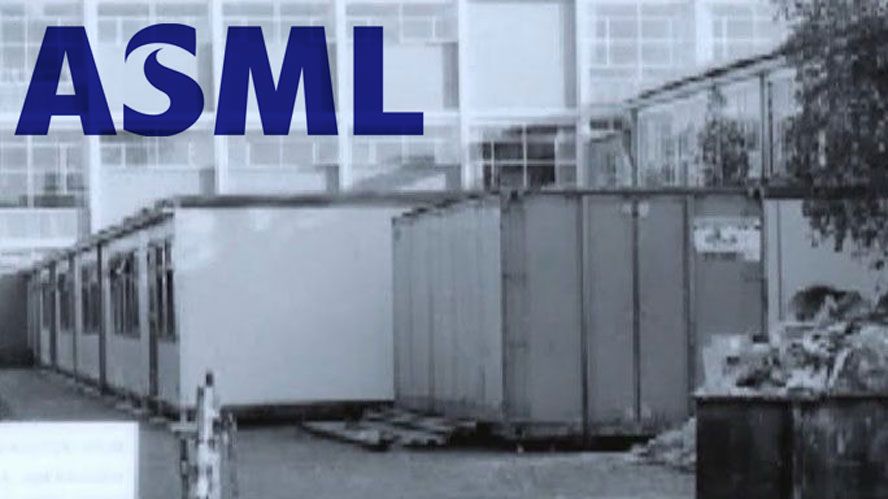
Original Business Case Weekly articleASML started as a joint venture nobody wanted, housed in a leaky shed behind a Philips factory, staffed with 47 engineers who believed the company was a disposal plan for a failed project [1][2]. Forty-two years later it is the only company on Earth capable of building the machines required to manufacture every advanced chip used in AI, smartphones, fighter jets, and cars [3][4]. The story is not one of brilliance in a single moment. It is the story of two bets the industry refused to make, a willingness to spend 20 years on one of them before it produced a single dollar of profit, and a supply-chain architecture that turned customers into shareholders and shareholders into co-developers [5][6].
As of April 2026, ASML trades at a market capitalization of approximately $573 billion, making it Europe’s most valuable technology company [3][7].
A Leaky Shed in Veldhoven, 1978-1988
The story begins not with a corporate problem. By the late 1970s, Philips Natlab, the research arm of the Dutch electronics conglomerate, had built a wafer stepper called the PAS 2000. A stepper projects the image of an integrated circuit onto a silicon wafer, step by step. It was promising technology and Philips did not know what to do with it. The company had interests in lighting, audio cassettes, compact discs, and medical imaging. A niche semiconductor tool built for a market dominated by Japanese competitors Nikon and Canon was not a priority [8].
Arthur del Prado, the founder of a smaller Dutch semiconductor equipment company called ASM International, saw an opening. In October 1982 he learned about the PAS 2000 project and approached Philips. Philips executives considered ASM an upstart and initially favored Perkin Elmer as a partner. The negotiations dragged. By September 1983 the two firms announced a joint venture. The contract was finalized in March 1984. Each side contributed $2.1 million and 50% ownership [2]. The new company was named ASM Lithography, later shortened to ASML.
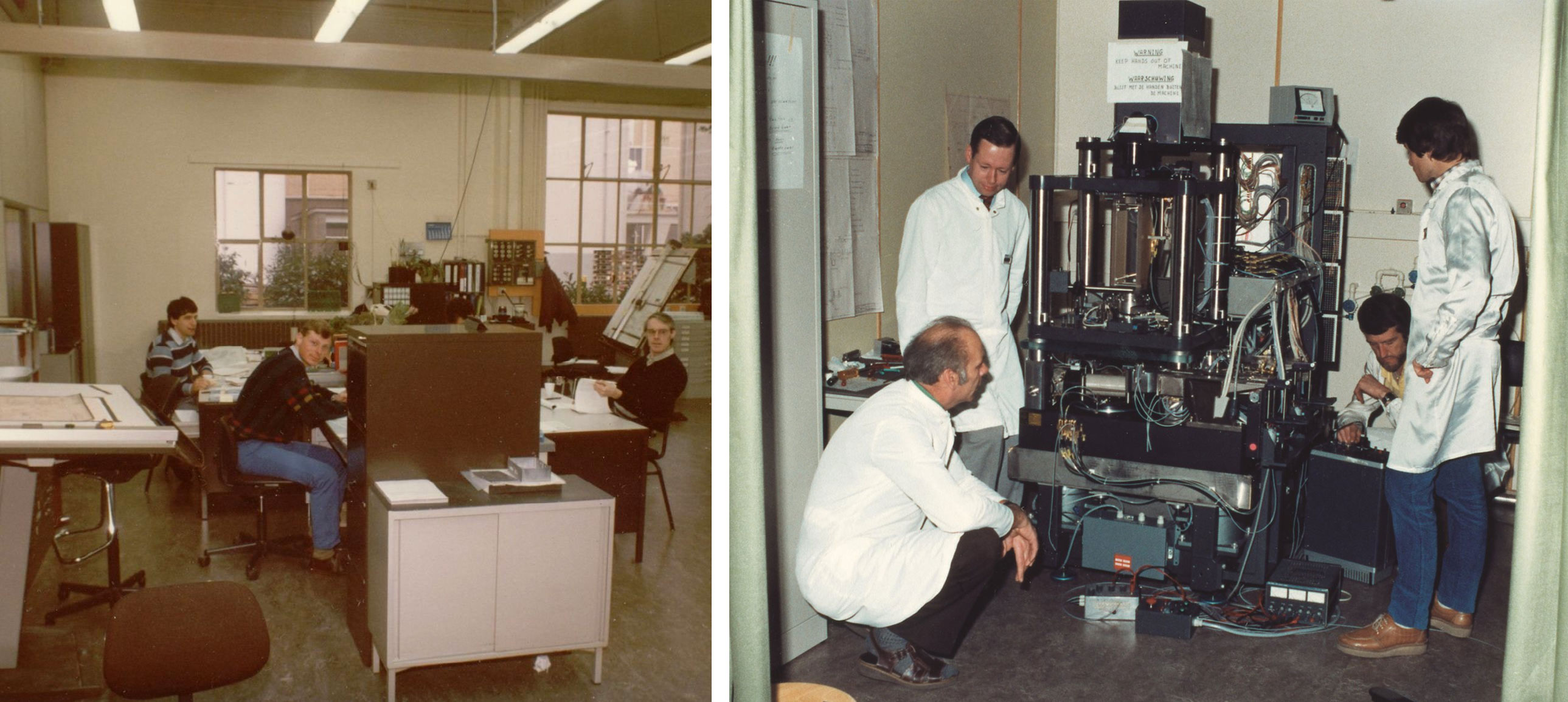
On April 1, 1984, ASML commenced operations [1]. The first 45 employees were installed in part of a long factory hall with a leaky roof. Of the 50 Philips employees offered transfer to the joint venture, 47 signed on, though many viewed it as asset stripping [2]. Frits van Hout later described what the culture was like:
My colleagues asked me: ‘Are you here voluntarily? Did Philips send you here?’ Many people were trying to find a way to get out and go elsewhere. We didn’t know anything about the business side or customers. Philips was in big turmoil in the late 1980s, and we were living on the brink of bankruptcy.
Frits van Hout, Chief Strategy Officer at ASML, interview with Quartz, 2022 [2]
The first CEO was Gjalt Smit, a former Philips manager with a doctorate in astronomical plasma physics [8]. In 1985 the company moved to a new office in Veldhoven, 10 kilometers from Philips headquarters. In 1986 ASML launched the PAS 2500 and formed its partnership with the German optics company Carl Zeiss, which would prove structurally decisive. By 1988, the mid-1980s chip industry downturn had forced ASM International to sell its 50% stake to Philips. The joint venture was over [9]. ASML was now a wholly owned Philips problem, and Philips itself was cutting costs across the conglomerate.
Your call
You are a Philips board member in late 1988. ASML has consumed investment for four years, ASM has just exited, the chip industry is contracting, and your lithography startup has few customers and is losing to Nikon. Do you wind it down, sell it, or fund another round of development at a time when Philips itself is under financial pressure?