
Dyson
The Man Who Made Billions From Dust
Original Business Case Weekly articleMost companies that dominate their category got there by listening to the market.
James Dyson got there by ignoring it. For 14 years, every vacuum manufacturer, every investor, and every retailer told him that bagless vacuum cleaners were commercially worthless. He spent those years in an unheated shed building one prototype per day, remortgaging his home, and accumulating over $1 million in debt.
When he finally launched his own company at age 46, he priced his product at twice the market average, hired almost exclusively inexperienced graduates, and refused outside capital. Within five years, he had captured more than half the UK vacuum market. The Dyson story is not about persistence for its own sake. It is about what happens when one person’s stubbornness turns out to be structurally correct about an entire industry’s incentive problem.
A Shed in Wiltshire, 1978–1986
James Dyson was born in 1947 in Cromer, Norfolk. His father, a teacher, died of cancer when James was nine. That early loss left a mark Dyson has spoken about openly.
I lost my father when I was nine years old. I had it built into me that my future was entirely down to me, and to do it on my own.
James Dyson, Interview with Entrepreneur, 2025
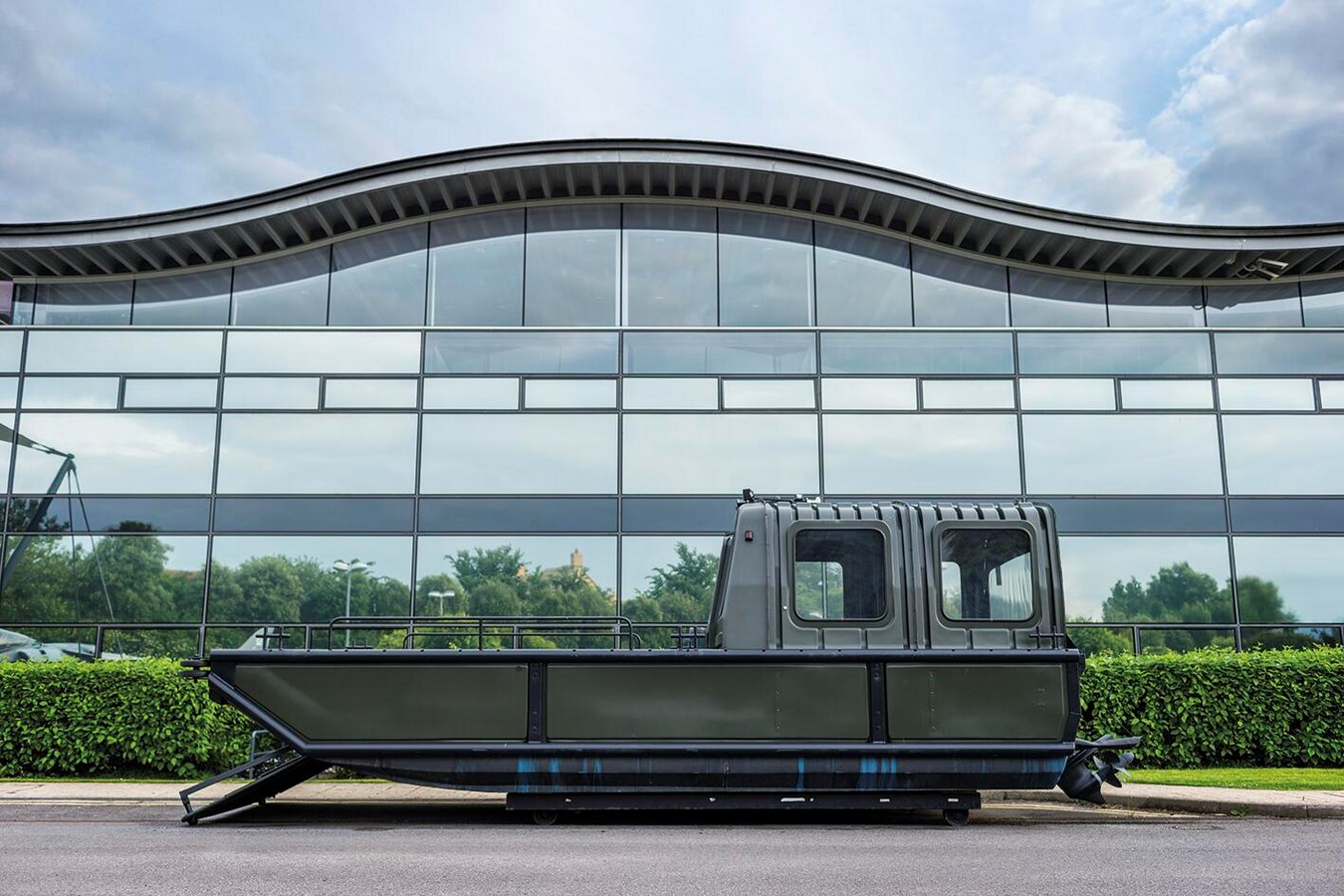
He studied classics and art at school, then enrolled at the Byam Shaw School of Art before transferring to the Royal College of Art. There he discovered design and switched from furniture to architecture, drawn to the work of Isambard Kingdom Brunel. His first notable invention came while still a student: the Sea Truck, a flat-hulled, high-speed landing craft that entered commercial and military use.
After graduation, he joined the engineering firm of Jeremy Fry, his mentor, who taught him to learn by doing rather than by theory.
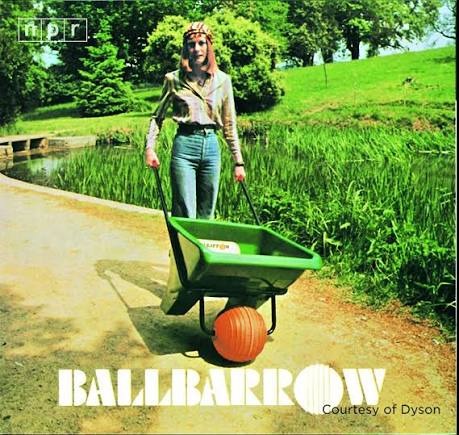
Dyson’s first entrepreneurial venture was the Ballbarrow, a wheelbarrow that replaced the traditional wheel with a ball for better stability on soft ground. It became a commercial success, but Dyson lost control of the company when his co-investors pushed him out. The idea was effectively stolen from under him. Rather than enter a prolonged fight, he moved on.
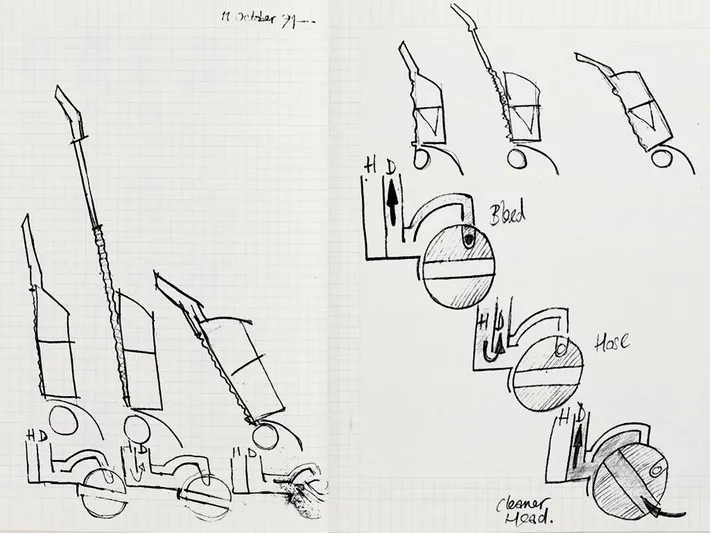
In 1978, while vacuuming his home with a Hoover Junior, Dyson noticed the machine lost suction as the bag filled with dust. Fine particles clogged the bag’s pores, choking airflow. He visited a local sawmill and observed a 30-foot industrial cyclone that separated sawdust from air using centrifugal force. No bag, no clogging. He ripped the bag off his Hoover, attached a crude cardboard cyclone with sticky tape, and the suction held.
What followed was five years of obsessive iteration. Working alone in the shed behind his house, Dyson built 5,127 prototypes, changing one variable at a time. His wife Deirdre, an art teacher, supported the family on her salary while Dyson accumulated debt. He remortgaged their house multiple times. The bank was calling.
Almost every businessperson I spoke to said that I was mad.
James Dyson, Interview with Entrepreneur, 2025
By 1983, prototype 5,127 worked. He called it the G-Force. But having a working product turned out to be only the beginning of Dyson’s problems.
Your call
If you had just spent five years building a product that no manufacturer would touch, with over $1 million in personal debt and a family to support, would you keep trying to license the technology or would you attempt to manufacture it yourself? What information would change your decision?