
Nokia
Roller coaster of repeating Collapse and Reinvention
Original Business Case Weekly articleSummary
This case study analyzes the trajectory of Nokia Corporation from its zenith as the ruler of the mobile world to its current status in January 2026 as a bifurcated infrastructure entity pivoting toward artificial intelligence. This is not a success story; it is a documentation of how a corporate superpower can be dismantled by the inertia of its own efficiency.
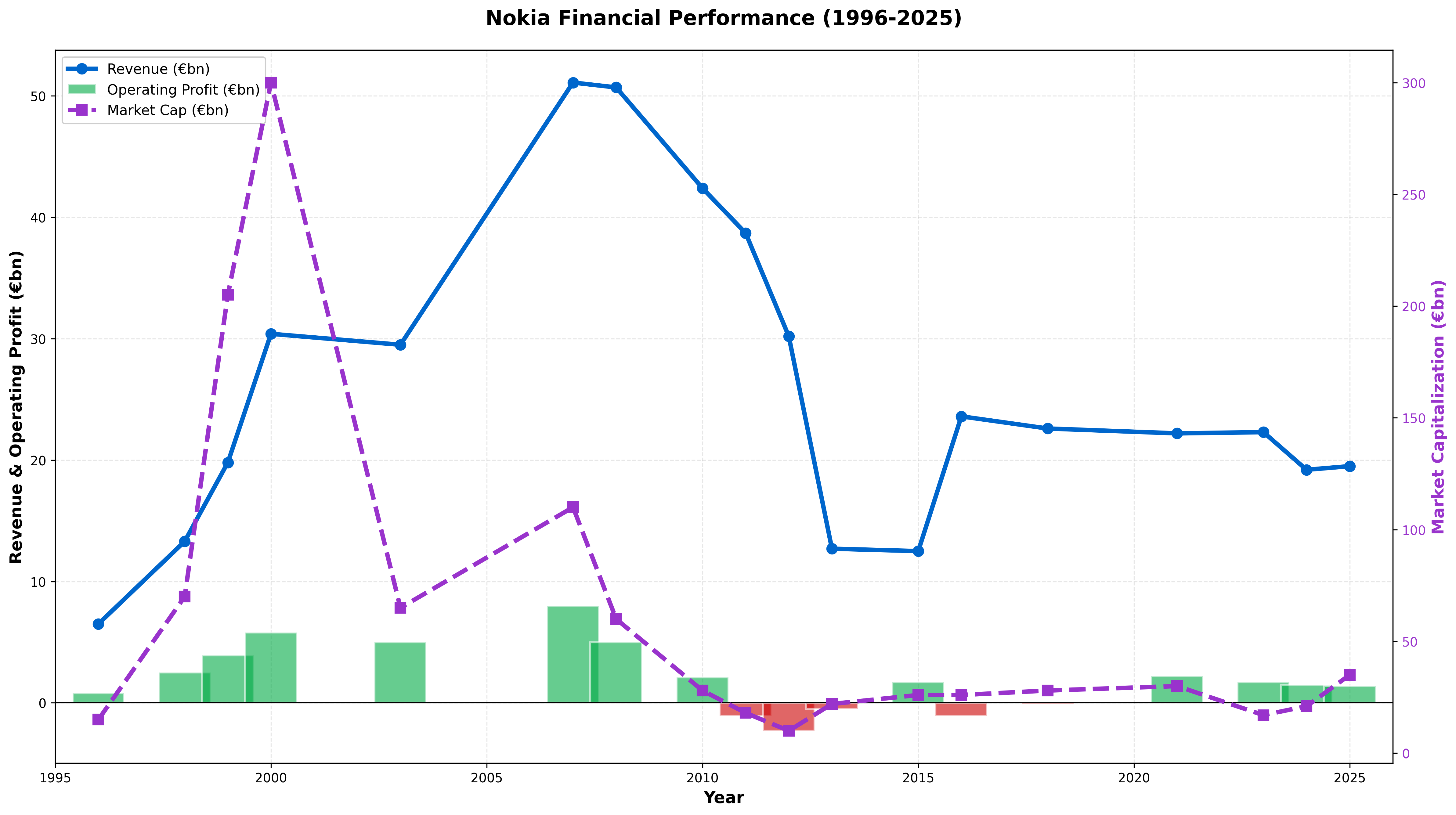
In 2007, Nokia commanded 41 percent of the global handset market, possessing a supply chain so dominant it was considered an insurmountable moat.1 By 2013, that division was insolvent and sold to Microsoft.3
Nokia repeatedly optimized for the present at the expense of the future. The company conquered the 1990s by treating mobile phones as voice hardware, missed the 2000s software revolution due to a “culture of fear” that silenced internal warnings, and stumbled in the 2020s 5G race by prioritizing speed of integration over silicon efficiency.4
As of January 2026, Nokia has executed a radical restructuring into “Network Infrastructure” and “Mobile Infrastructure,” explicitly decoupling its growing data center business from its stagnant radio business to survive the “AI Supercycle”.6
Part 1: The Bloodless Amputation (1988–1998)
In the late 1980s, Nokia was not a tech giant but a confused conglomerate. Its portfolio included rubber boots, toilet paper, televisions, and cables. The company was financially distressed, with its electronics division bleeding capital.8
In 1991, the Soviet Union – a major trade partner for Finland – collapsed, plunging the Finnish economy into a deep recession. Nokia’s diverse industrial holdings were dragging the company toward bankruptcy. The board faced a critical decision: retrench into safe, legacy industrial goods or bet the entire company on the unproven technologies like GSM (Global System for Mobile Communications) standard.9
CEO Jorma Ollila, appointed in 1992, chose aggressive divestment. He sold off the power, rubber, and cable units – divisions that were historically the company’s financial bedrock – to focus exclusively on telecommunications. Ollila directed all available capital into R&D for the Nokia 1011, the first mass-produced GSM phone.9
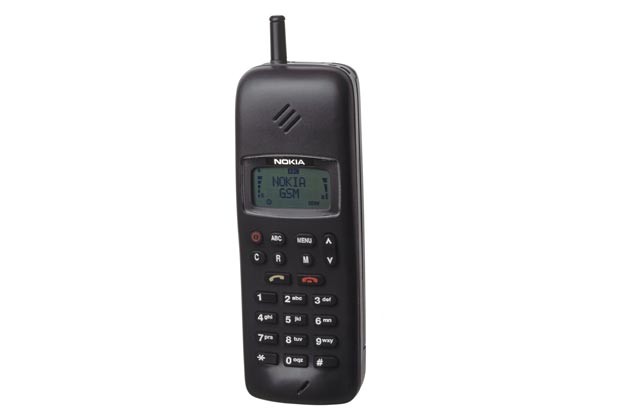
The gamble paid off with asymmetrical returns. The Nokia 2100 series, launched in 1994 with a sales target of 400,000 units, sold 20 million.9 By shedding its industrial weight, Nokia became agile enough to outmaneuver entrenched incumbents like Motorola, who were slow to transition from analog to digital. By 1998, Nokia was the world’s largest mobile phone manufacturer.12
Alternatives Considered
The Siemens Model: Nokia could have retained its industrial divisions, using the cash flow from cables and rubber to subsidize the telecom unit slowly. This would have mirrored Siemens or General Electric. Evidence suggests this would have failed; Nokia lacked the capital reserves of those giants to fight a multi-front war. The “burn the boats” strategy was necessary to force organizational focus.9
Your call
If you are leading a diversified company today with one high-growth but loss-making division, what metrics would convince you to sell your profitable cash cows to fund it?