
Huawei
Long march through the tech war
Original Business Case Weekly article“Our current situation is that we are repairing our ‘aircraft’ during its flight so that it can make its way back home.” — Ren Zhengfei, Founder and CEO, Huawei Technologies
EXECUTIVE SUMMARY
By January 2026, Huawei Technologies Co., Ltd. had become one of the most unusual corporate experiments of the modern era.
Technically severed from the global semiconductor supply chain by the most stringent export controls ever imposed on a private enterprise, the Shenzhen-based giant had not only avoided the bankruptcy predicted by many Western analysts in 2019 but had engineered a resurgence that redefined the competitive landscape of the technology sector.
In the fourth quarter of 2025, Huawei reclaimed the number one position in the Chinese smartphone market, capturing a 17% share and surpassing Apple, while its proprietary operating system, HarmonyOS NEXT, exceeded 100,000 native applications and 40 million device activations.
This case study examines the strategic arc of Huawei from its founding in 1987 to its status in early 2026. It dissects the leadership decisions made by founder Ren Zhengfei and his rotating chairmen during moments of existential crisis.
Unlike typical growth narratives fueled by venture capital and open markets, Huawei’s history is defined by “crisis management as strategy.”
From the early failure of proxy sales to the “Spare Tire” plan that countered U.S. sanctions, Huawei’s evolution offers a masterclass in organizational resilience, designed redundancy, and geopolitical maneuvering.
The analysis is structured around three distinct eras of strategic transformation:
The Era of Survival (1987–2010): From reselling PBX switches to the “Wolf Culture” of rural encirclement and the “Winter of Huawei.”
The Era of Expansion (2011–2018): The consumer pivot under Richard Yu, the rejection of white-label manufacturing, and the rise to global telecommunications dominance.
The Era of Resilience (2019–2026): The response to the Entity List, the “cut-limb” divestiture of Honor, the internal conflict over automotive strategy, and the successful launch of the “Pure Blood” HarmonyOS ecosystem.
PART I: THE GENESIS OF DESPERATION (1987–1993)
A Proxy Sales Agent
In 1987, Shenzhen was the frontier of China’s “Reform and Opening Up” policy. It was here that Ren Zhengfei, a 44-year-old former engineer in the People’s Liberation Army (PLA) Engineering Corps, founded Huawei. The company started with a registered capital of CNY 21,000 (approximately USD 3,000 at the time), raised from friends and investors.
Ren’s background was complex. Although he had served in the military, he did not hold high military rank. Furthermore, his entry into the Communist Party was delayed for years due to his parents’ “intellectual” social background and his father’s prior work for the Nationalist government – a political liability during the Cultural Revolution.
This background instilled in Ren a deep sense of insecurity and a drive for self-preservation that would later permeate Huawei’s corporate culture.
Initially, Huawei was not a technology creator. It operated as a sales agent for Private Branch Exchange (PBX) switches imported from a Hong Kong vendor.
The business model was simple arbitrage: buy low in Hong Kong, sell high to the burgeoning number of hotels and small enterprises in the Pearl River Delta. However, the fragility of this model was exposed in late 1987 when the Hong Kong vendor abruptly terminated the supply agreement as they sought to capture the margins for themselves.
Leadership Decision 1: The R&D Pivot. Ren Zhengfei stood at a crossroads. The company had lost its only product line.
Option A: Find another vendor to resell, maintaining the low-risk trading model.
Option B: Commit all available capital to independent Research and Development (R&D) to build a proprietary switch.
Ren chose Option B, committing the company to a path of high risk and capital intensity.
Ren concluded that a trading company would always be a “laborer” for foreign capital, vulnerable to the whims of suppliers. “Without our own technology, we will never have independence,” he told early employees.
The decision nearly bankrupted the young company. To fund development, Huawei had to borrow money at exorbitant interest rates, reportedly as high as 20–30%, from local state-owned enterprises and other entities. The financial pressure was immense.
During the development of the C&C08 switch, Ren famously stated, “If the C&C08 fails, I will jump out of the window”. This was not hyperbole; it was a reflection of the total commitment required.
The C&C08 Breakthrough and “Wolf Culture”
The Chinese telecommunications market in the late 1980s was dominated by foreign giants, a situation locally referred to as “Seven Countries, Eight Systems” (NEC and Fujitsu from Japan, Lucent from the US, Nortel from Canada, Ericsson from Sweden, Siemens from Germany, BTM from Belgium, and Alcatel from France). These companies controlled the infrastructure of China’s major cities.
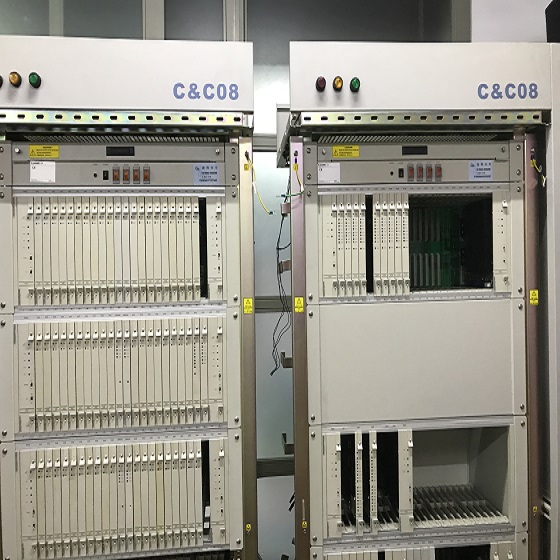
Huawei’s R&D team, working around the clock, launched the C&C08 digital switch ( telecommunication switching and network access, integrating various services like PSTN, ISDN, and the Internet) in 1993. While it lagged behind Western competitors in raw throughput, it possessed a critical advantage: adaptability. The C&C08 was designed to withstand the unstable power grids, voltage fluctuations, and rodent damage common in rural China – conditions that frequently caused Western equipment to fail.
Unable to compete with Ericsson or Alcatel in Beijing or Shanghai, Ren deployed a strategy inspired by Mao Zedong’s military tactics: “Encircle the cities from the countryside”. Huawei sales teams targeted county-level post and telecommunications bureaus, leveraging their product’s ruggedness and lower price point.
To execute this strategy against superior resource-rich competitors, Ren cultivated what became known as “Wolf Culture.” This culture was defined by three characteristics:
A keen sense of smell: Sensitivity to market opportunities.
A willingness to sacrifice: Dedication to the mission above personal comfort.
Pack cooperation: Intense teamwork.
Engineers and sales staff were issued mattresses to keep under their desks. They worked until exhaustion, slept at the office, and woke up to resume work. This was an economic necessity; lacking the headcount of their rivals, Huawei employees compensated with intensity. “We had no choice,” Ren recalled. “We were fighting for our lives”.
Ren often used military metaphors to galvanize his workforce. He referenced the “Yalu River,” the border crossed by Chinese soldiers during the Korean War, to signify points of no return. “Loyal bones can be buried anywhere in the green mountains,” became a rallying cry for staff sent to remote, underdeveloped regions, signaling that the mission was more important than returning home.
PART II: THE GLOBAL MARCH AND THE “WINTER” (1994–2010)
By 1995, Huawei had secured the Chinese rural market and generated sales of CNY 1.5 billion. However, the domestic urban market remained a fortress of foreign incumbents. To grow, Huawei looked abroad.
The Path of Most Resistance
Conventional business wisdom suggested expanding into markets with high purchasing power. Huawei did the opposite. It targeted markets that Western competitors ignored or deemed too risky: Russia, Africa, and Latin America.
Russia (1997): This was Huawei’s first international venture. The company formed a joint venture with a Russian firm, Beto, to produce switches. The Russian economy was in chaos following the collapse of the Soviet Union, but this chaos meant Western firms were retreating, leaving a vacuum Huawei could fill.
Africa and the “Red Hat”: In Africa, Huawei won contracts by offering prices 30% lower than competitors and providing superior service. When networks failed in conflict zones or harsh climates, Huawei engineers were often the only ones willing to travel to the site to fix them. This built immense goodwill with local governments and carriers. Domestically, Huawei utilized a “Red Hat” strategy – aligning with government goals and state-owned enterprises to secure credit and political cover while remaining privately owned.
The “Winter of Huawei” (2001)
In 2000, Huawei’s revenue topped $2.6 billion.
Yet, in 2001, Ren Zhengfei wrote a landmark internal essay titled “Huawei’s Winter.”
Context: The dot-com bubble had burst. Global telecom giants like Nortel and Lucent were crumbling.
Insight: Ren argued that Huawei’s success was largely due to China’s rising economic tide, not intrinsic organizational capability. He warned that “winter is coming” and that the company was unprepared for a downturn.
Action: Ren initiated a massive management transformation. He hired IBM consultants to implement Integrated Product Development (IPD) and Integrated Supply Chain (ISC) processes.
Cost: The consulting fees reportedly cost hundreds of millions of dollars – a staggering sum for Huawei at the time.
Result: This transformation shifted Huawei from a “guerrilla force” relying on individual heroism to a “regular army” with standardized, scalable processes. It laid the foundation for global scaling.
To fund this transformation and survive the downturn, Huawei made a painful choice. It sold its subsidiary Avansys (a power supply unit) to Emerson for $750 million. This capital injection was critical for surviving the “Winter” and funding the IBM restructuring.
The Joint Venture Era (2003–2008)
To gain credibility and technology, and to diffuse competitive threats, Huawei entered strategic Joint Ventures (JVs).
1. Huawei-3Com (H3C) - 2003:
Context: Cisco had sued Huawei for patent infringement.
Strategy: Huawei formed a JV with 3Com, a US networking rival of Cisco. 3Com provided the brand and enterprise channels; Huawei provided the engineering and Chinese distribution.
Outcome: This partnership legitimized Huawei in the enterprise networking space. Huawei effectively learned enterprise standards and eventually acquired 3Com’s stake before selling it to HP for a significant profit.
2. Huawei-Symantec (2007):
Context: Need for storage and security technology.
Strategy: A JV with Symantec to develop storage appliances. This accelerated Huawei’s entry into the data center market.
These JVs were calculated moves to “borrow a boat to go to sea.” By the time these partnerships dissolved, Huawei had absorbed the necessary know-how to operate independently and competitively on a global scale.
PART III: THE CONSUMER REVOLUTION (2011–2018)
In 2010, Huawei was a B2B giant, invisible to the average consumer. Its “Devices” division manufactured white-label USB dongles and low-end phones for carriers like Vodafone and Orange. Margins were razor-thin, and brand equity belonged entirely to the carriers.
The Sanya Meeting (2011)
In a historic meeting in Sanya, Hainan, Ren Zhengfei and the board convened to decide the future of the handset business.
The Problem: The white-label model had no future. Android smartphones were rising, and competitors like Apple and Samsung were capturing 90% of industry profits.
The Decision: Huawei would pivot to building its own premium brand (B2C), ceasing the production of low-margin white-label feature phones.
The Architect: Richard Yu (Yu Chengdong) was appointed Chairman of the Consumer Business Group (CBG).
The Painful Pivot: White Label vs. Premium Brand
Richard Yu’s tenure began with radical, unpopular decisions that faced immense internal resistance.
Kill the Working Model: Yu advocated for terminating the lucrative white-label feature phone business, which shipped millions of units but offered no strategic value. Sales plummeted initially, causing internal friction.
The P and Mate Series: Yu pushed for high-end flagship devices. The early models, the Ascend P1 and D1 (2012), were commercial failures due to overheating and software issues.
The Turnaround: The launch of the Mate 7 in 2014 was the breakthrough. With its large screen and fingerprint sensor, it appealed perfectly to Chinese business professionals. By 2015, Huawei had become the world’s third-largest smartphone maker.
Lesson in Leadership: During the struggling years of 2012–2013, internal calls to fire Richard Yu were loud. Ren Zhengfei intervened to protect him, prioritizing the long-term strategic shift over short-term financial turbulence. “We must give the general a chance to fight,” Ren reportedly said.
By 2018, Huawei surpassed Apple to become the second-largest smartphone manufacturer globally. The consumer business had grown from a rounding error to contributing nearly 50% of the company’s total revenue.
The Governance of “Collective Leadership”
Huawei’s Rotating Chairman system (implemented in 2011) allowed different leaders (Eric Xu, Guo Ping, Ken Hu) to steer the ship for six-month terms.
This structure prevented the rigidity of a single CEO. It allowed for diverse perspectives to surface at the top. For instance, when Richard Yu clashed with the board over the automotive strategy, the collective leadership (specifically Xu Zhijun) enforced the “supplier” strategy to mitigate risk, providing a check-and-balance system that kept the company grounded while allowing Yu to innovate within boundaries.
PART IV: THE GEOPOLITICAL SIEGE (2019–2023)
The Entity List (May 2019)
The US-China trade war culminated in a direct strike on Huawei. On May 16, 2019, the U.S. Bureau of Industry and Security (BIS) added Huawei to the Entity List, banning it from buying U.S. technology (chips, Google Mobile Services, software) without a license.
Your call
You sit on Huawei’s governing commission after the May 2019 Entity List cuts access to critical suppliers. Revenue may fall while replacement technology requires years of heavy research spending. Do you enter company-wide “battle mode,” protect near-term cash, or sell selected businesses to fund the core? Which advantage of the employee-ownership structure matters most, and what limit prevents it from excusing undisciplined spending?