
Xiaomi
"Triathlon", "Bamboo Forest" and “Human x Car x Home” – 3 strategies for Global Success
Original Business Case Weekly articleIn January 2026, Xiaomi Corporation stands as an anomaly in the global technology landscape.
While Apple abandoned its decade-long electric vehicle project and legacy automotive giants struggle with software integration, Xiaomi successfully delivered over 410,000 electric vehicles in 2025, achieving profitability in its automotive division within 18 months of its first delivery.1
Simultaneously, the company reclaimed the number two position in the global smartphone market and deployed humanoid robotics into its manufacturing lines.3
This outcome was not inevitable. Xiaomi’s sixteen-year history is defined by a series of existential crises that required the company to dismantle its own successful business models to survive.
From the “Triathlon” model that disrupted the smartphone industry to the “Bamboo Forest” ecosystem that monetized the Internet of Things (IoT), and finally to the “Human x Car x Home” strategy that bridged the digital and physical worlds, Xiaomi’s leadership has repeatedly chosen high-risk reinvention over stagnation.
This case study analyzes the strategic evolution of Xiaomi from its founding in 2010 to January 2026. It dissects the critical decision-making frameworks employed by founder Lei Jun during moments of near-collapse, specifically focusing on the 2016 supply chain crisis, the 5% hardware margin pledge, and the high-stakes entry into the electric vehicle market.
PART I: THE TRIATHLON MODEL (2010–2014)
In 2010, the Chinese mobile internet landscape was fragmented and inefficient.
The market was dominated by foreign giants – Apple, Samsung, and Nokia – who commanded high premiums, and a chaotic underbelly of “Shanzhai” (counterfeit or low-quality) manufacturers in Shenzhen.5 Domestic incumbents like Huawei and ZTE were primarily business-to-business (B2B) telecommunications infrastructure companies that viewed handsets as low-margin commodities to be sold through carrier subsidies.
Lei Jun, a serial entrepreneur who had previously led Kingsoft and sold Joyo.com to Amazon China, identified a structural inefficiency in the hardware industry. Traditional retail distribution and marketing accounted for up to 50% of a smartphone’s retail price.7

Furthermore, the user experience on Android was subpar; localizations were poor, and software updates were infrequent. Lei hypothesized that a company could bypass these inefficiencies by treating hardware development like software development: rapid iteration, direct-to-consumer distribution, and a focus on user engagement over unit margins.
The “Triathlon” and Software-First Entry
Lei Jun did not begin by manufacturing a device. He began by building an operating system and a community.
Strategic Pillar 1: Software First (MIUI)
On August 16, 2010, Xiaomi launched MIUI, a custom ROM based on Android. It was released for free on developer forums. The strategy was to acquire a critical mass of sophisticated users (”Mi Fans”) before incurring the capital expenditure of hardware manufacturing.
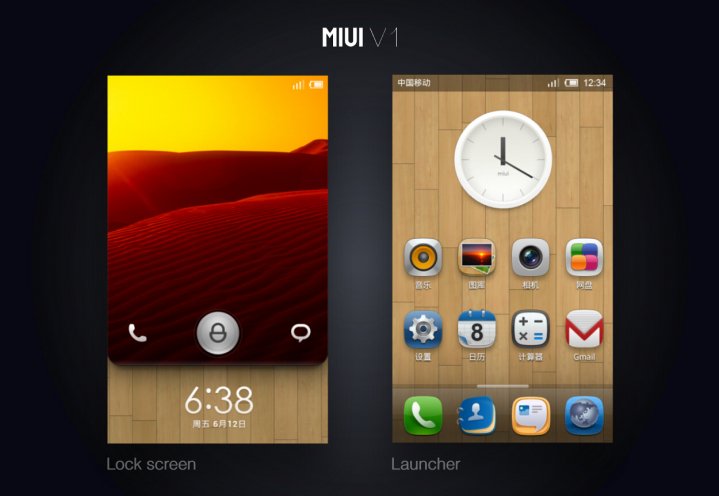
Xiaomi released weekly updates every Friday – a cadence unheard of in the industry – based directly on user feedback collected from forums. This created a sense of ownership among the user base, turning customers into evangelists and beta testers.
By the time Xiaomi was ready to launch hardware, it had millions of active MIUI users who had effectively co-designed the product.
Strategic Pillar 2: The Iron Triad (Triathlon)
Lei Jun codified the business model as a “Triathlon” consisting of three mutually reinforcing pillars:
Hardware: High-specification devices sold at bill-of-materials (BOM) cost.
New Retail: Direct-to-consumer online sales to eliminate channel markup.
Internet Services: Monetization through high-margin services (themes, games, lending, cloud storage) to subsidize the hardware.
Strategic Pillar 3: Price Destruction via “Hunger Marketing”
When the Mi 1 was announced in August 2011, it featured a top-tier Qualcomm dual-core processor. Comparable devices from Samsung and HTC sold for RMB 4,000+. Xiaomi priced the Mi 1 at RMB 1,999 (approximately $300). They produced small batches that were sold instantly online. This “hunger marketing” created artificial scarcity, drove viral hype, and ensured Xiaomi held zero depreciating inventory.
Consequence: Hyper-Growth and False Security
The execution of the Triathlon model resulted in unprecedented growth.
Adoption: The first batch of 100,000 Mi 1 units sold out in under three hours.7
Market Leadership: By 2014, just four years after founding, Xiaomi became the number one smartphone vendor in China and the third largest globally, surpassing LG and Lenovo.
Valuation: In December 2014, Xiaomi raised $1.1 billion at a valuation of $45 billion, making it the most valuable private technology startup in the world at that time.13
However, the rapid ascent masked deep structural vulnerabilities. The “Triathlon” relied heavily on the novelty of online sales, which accounted for only ~30% of the total Chinese smartphone market.
Competitors, waking up to the threat, began to adapt. Huawei launched its sub-brand “Honor” to mimic Xiaomi’s online model, while BBK Electronics (Oppo and Vivo) doubled down on the 70% of the market Xiaomi ignored: offline retail in lower-tier cities. Furthermore, Xiaomi’s relationship with suppliers was transactional and often arrogant; the company squeezed suppliers for the lowest price while demanding flagship volumes, building resentment in the supply chain that would soon prove catastrophic.
Your call
Consider the “Software First” entry strategy. Most hardware startups fail due to high capital intensity and inventory costs before finding product-market fit. By building the OS (MIUI) first, Xiaomi validated demand with zero inventory risk. If you were launching a hardware startup today (e.g., in robotics or AR), could you replicate this “community-first” approach, or was this a unique artifact of the early Android era?