
PDD Holdings (Pinduoduo and Temu)
How to conquer the e-commerce market with a commission of only 0.6%
Original Business Case Weekly articleIntroduction
PDD Holdings is the parent of Pinduoduo, China’s social commerce phenomenon, and Temu, the cross‑border marketplace that has taken global consumers by surprise. Pinduoduo entered a market already dominated by Alibaba and JD.com yet managed to become the fastest Chinese platform to reach 100 billion RMB of gross merchandise value (GMV, over 14 billion dollars).
This case study traces PDD’s development from inception to 2025, highlighting the contexts behind each major decision, the choices leadership made, and their consequences.
Origins and Founding (2015)
Colin Huang (Huang Zheng) grew up in a working‑class family in Hangzhou. A gifted student, he won a national math Olympiad medal that earned him admission to a top foreign‑language high school[1]. Internships at Microsoft China and Microsoft HQ gave him exposure to software development and salaries that exceeded his parents’ annual income[2]. After graduating from Zhejiang University and the University of Wisconsin, he joined Google in the United States. Mentors like NetEase founder William Ding encouraged him to return to China[3]. He founded two start‑ups—Overseas Express (a cross‑border e‑commerce platform) and Xinyoudi (mobile games)—before pivoting again.
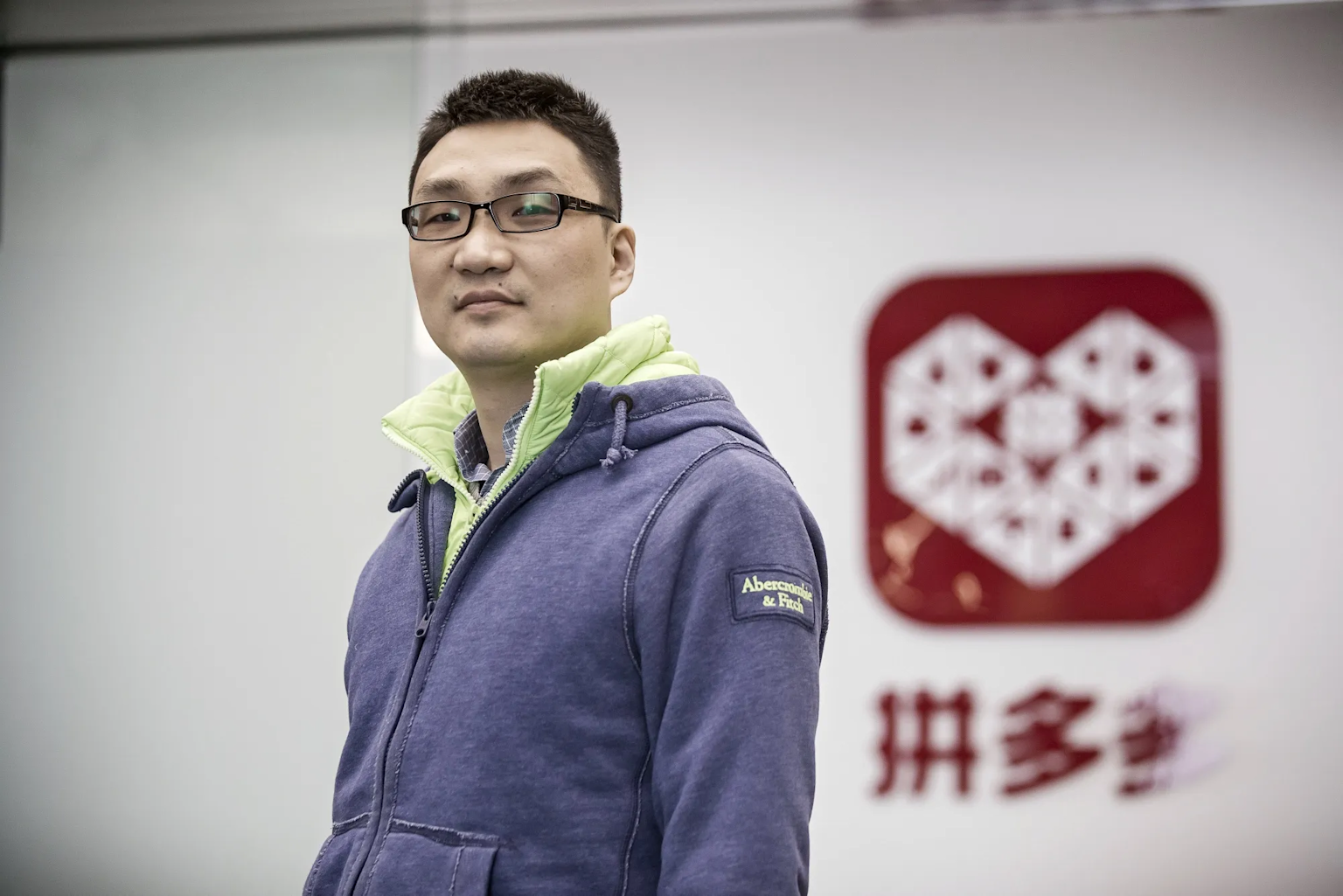
By 2015, Chinese e‑commerce was dominated by Alibaba and JD.com, yet those platforms primarily served wealthier consumers in first‑tier cities. Lower‑tier cities—home to roughly 59 % of China’s GDP and 73 % of its population[4]—remained under‑penetrated. Mobile penetration and WeChat usage were soaring, and Tencent was seeking ways to monetize its social network. Huang saw an opportunity for a social commerce platform.
Huang established Pinduoduo in September 2015. Inspired by ByteDance’s algorithmic personalization and Tencent’s gaming‑like engagement, he wanted Pinduoduo to make shopping fun rather than purely transactional. In his IPO prospectus he described Pinduoduo as a “an exemplification of a multi-dimensional space, seamlessly integrating cyberspace and the physical space. A combination of Costco and Disneyland driven by a distributed network of intelligence agents.”[5]. The platform integrated a team purchase mechanism: consumers could initiate purchases and invite friends via WeChat to form a group; once enough people joined, the order would be executed at a lower price. Unlike early Groupon deals—which required large numbers of strangers and used email lists—Pinduoduo’s groups were small, usually two to five people, and communication occurred through WeChat mini‑programs[6]. By embedding within WeChat and designing the interface like a social feed, Pinduoduo turned users into ambassadors; discounts of up to 90 % and gamified promotions encouraged daily visits[7].
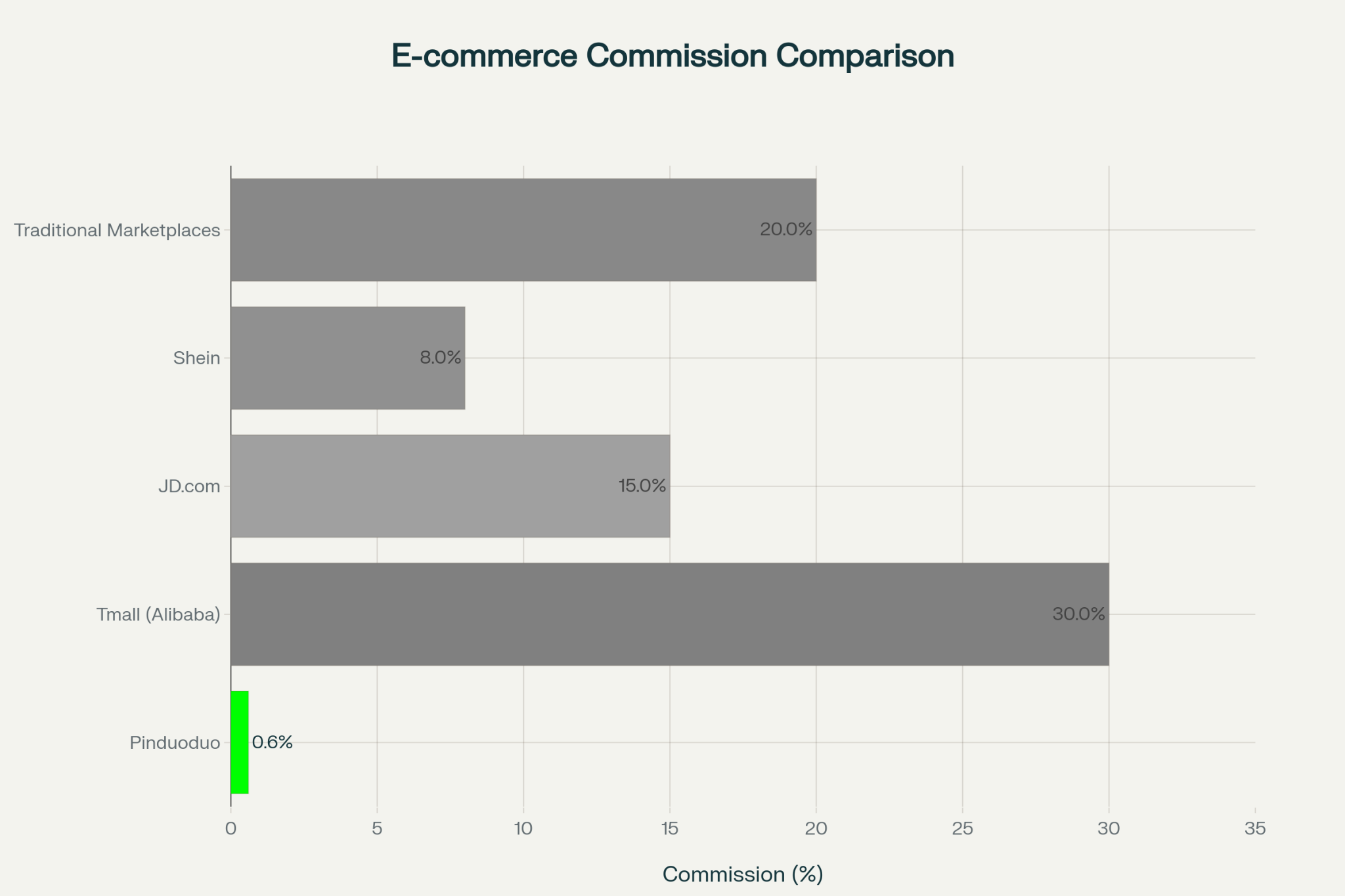
Huang chose to focus on perishable goods and daily necessities, starting with fruit. The company removed layers of wholesalers and distributors, partnering directly with farmers and manufacturers, which allowed it to offer 0.6% commissions—well below the ~30 % fees on Alibaba’s Tmall[8]. Pinduoduo provided producers with logistic support and price forecasting, but it did not hold inventory (avoiding capital‑intensive first‑party operations).
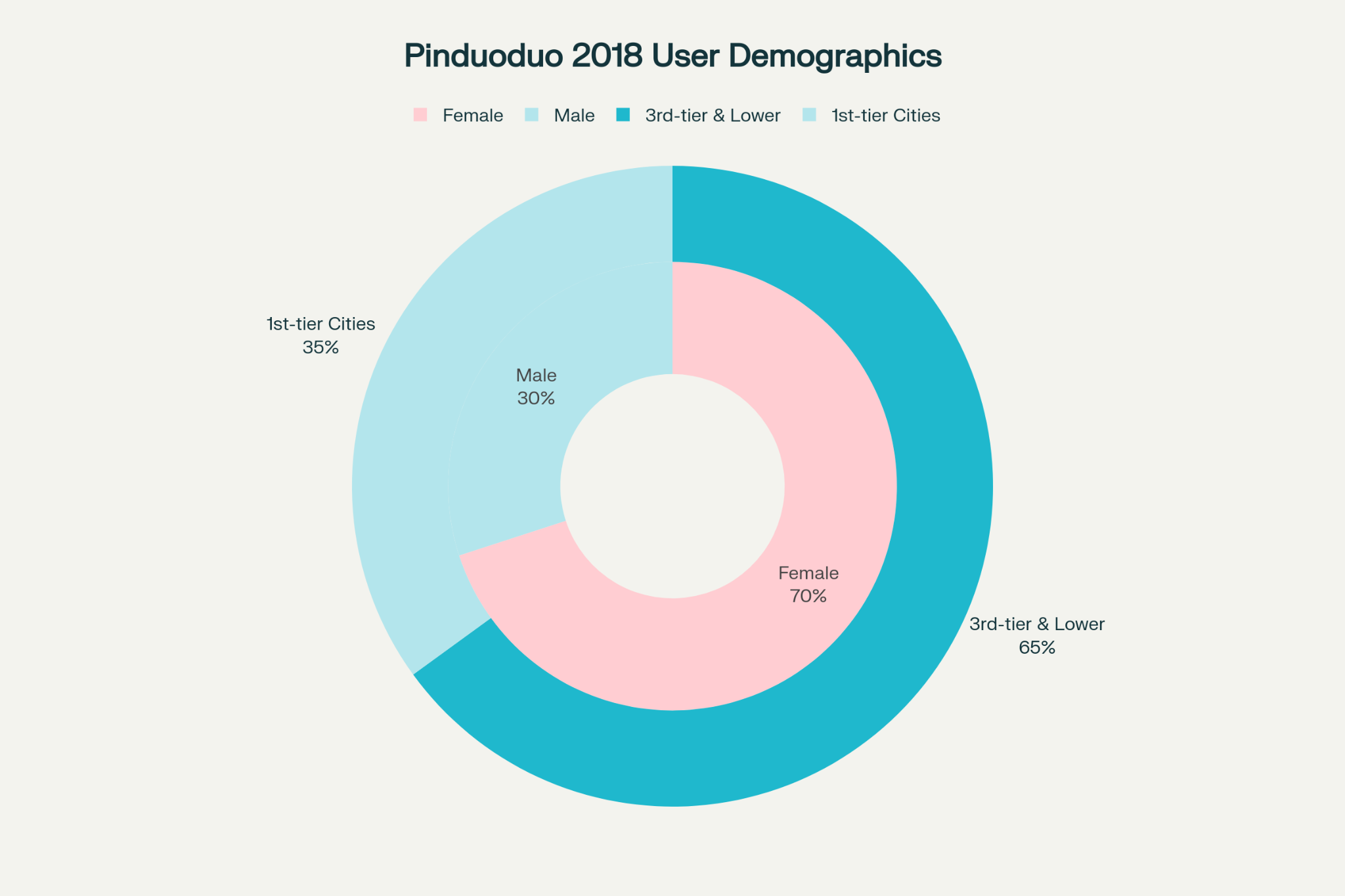
The social commerce model took off among price‑sensitive consumers. By 2018, 65 % of Pinduoduo’s users lived in third‑tier and lower‑tier cities and roughly 70 % were women[9]. However, by prioritizing rapid expansion and low prices, the company attracted counterfeit and poor‑quality goods and faced high return rates[11]. Complaints about fake products and a user rating near one star indicated weak consumer trust[12]. The growth also masked an aggressive work culture; employees reportedly logged more than 300 hours per month, an issue that would later erupt in controversy.
Your call
You are Colin Huang in 2015 entering a market dominated by Alibaba and JD.com. You can compete for affluent urban shoppers on familiar terms or design group purchasing around WeChat users in lower-tier cities with lower order values. Which segment do you choose, and what behaviour would prove that social buying is a durable distribution advantage rather than a discount novelty?